


What do poodles, matcha and a beeswax bread bag have in common?
They’re part of the beautiful chaos of successful neighborhoods.
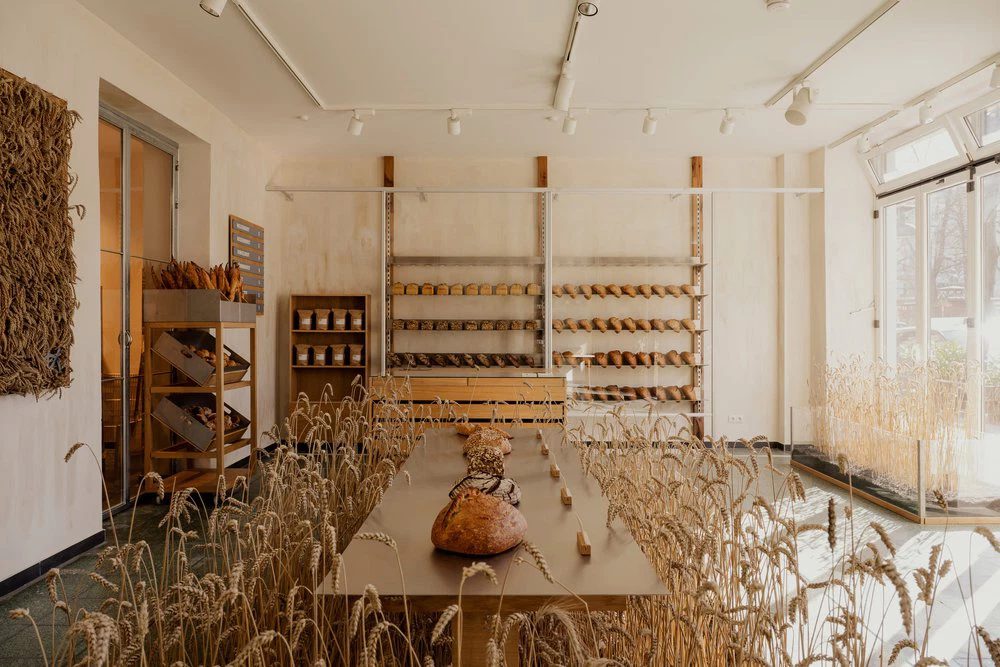
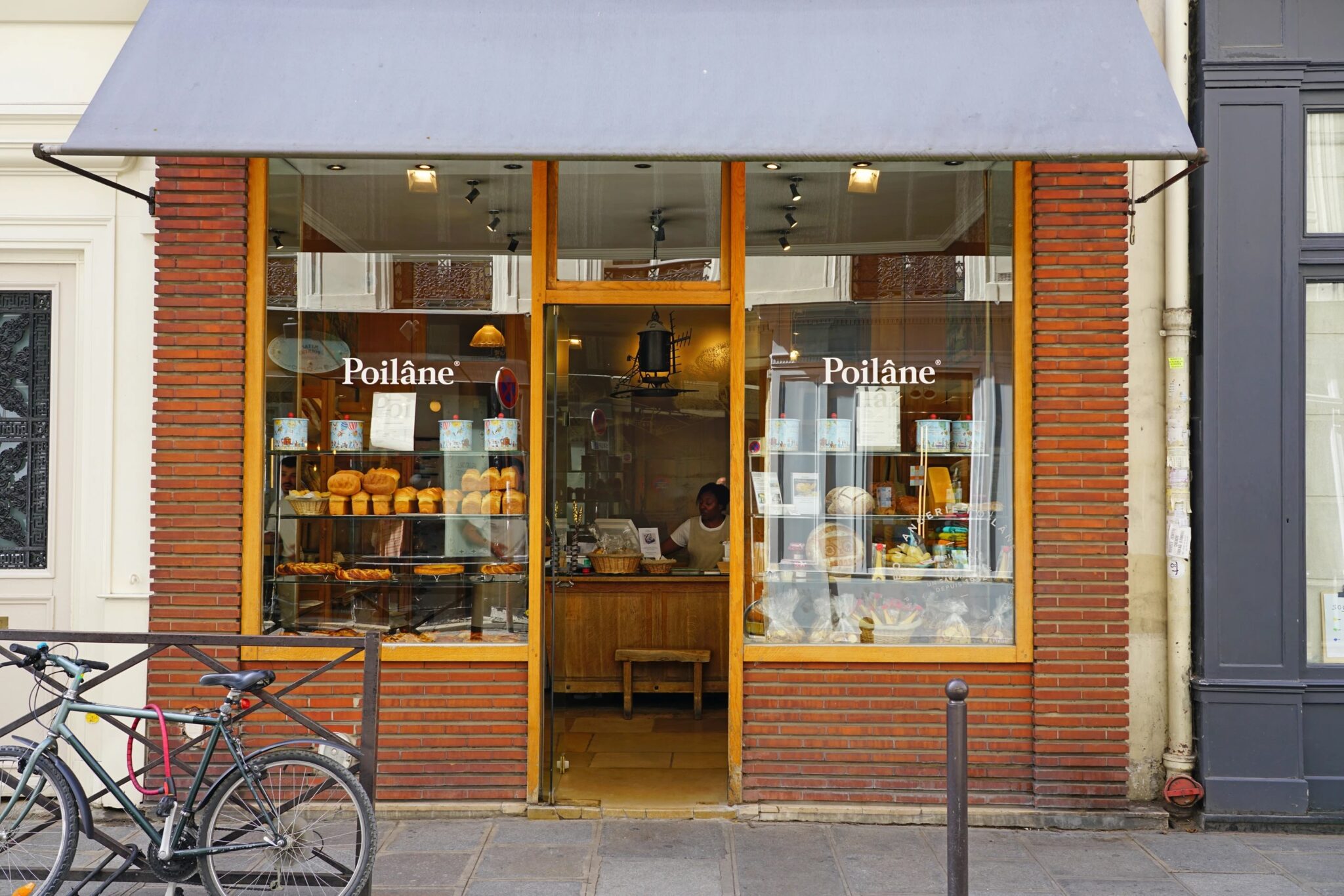
“THE MODERN CONSUMER DOESN’T VISIT A BAKERY FOR BREAD; THEY VISIT FOR IDENTITY ALIGNMENT,” STATES HURS MAGAZINE. “IN A WORLD OF DIGITAL NOISE, THE PHYSICAL RETAIL ANCHOR—BE IT AN ARCHIVAL FASHION VAULT OR A SOURDOUGH SPECIALIST—SERVES AS A HIGH-FRICTION FILTER THAT VALIDATES THE CONSUMER’S PLACE IN THE TRIBAL HIERARCHY.”
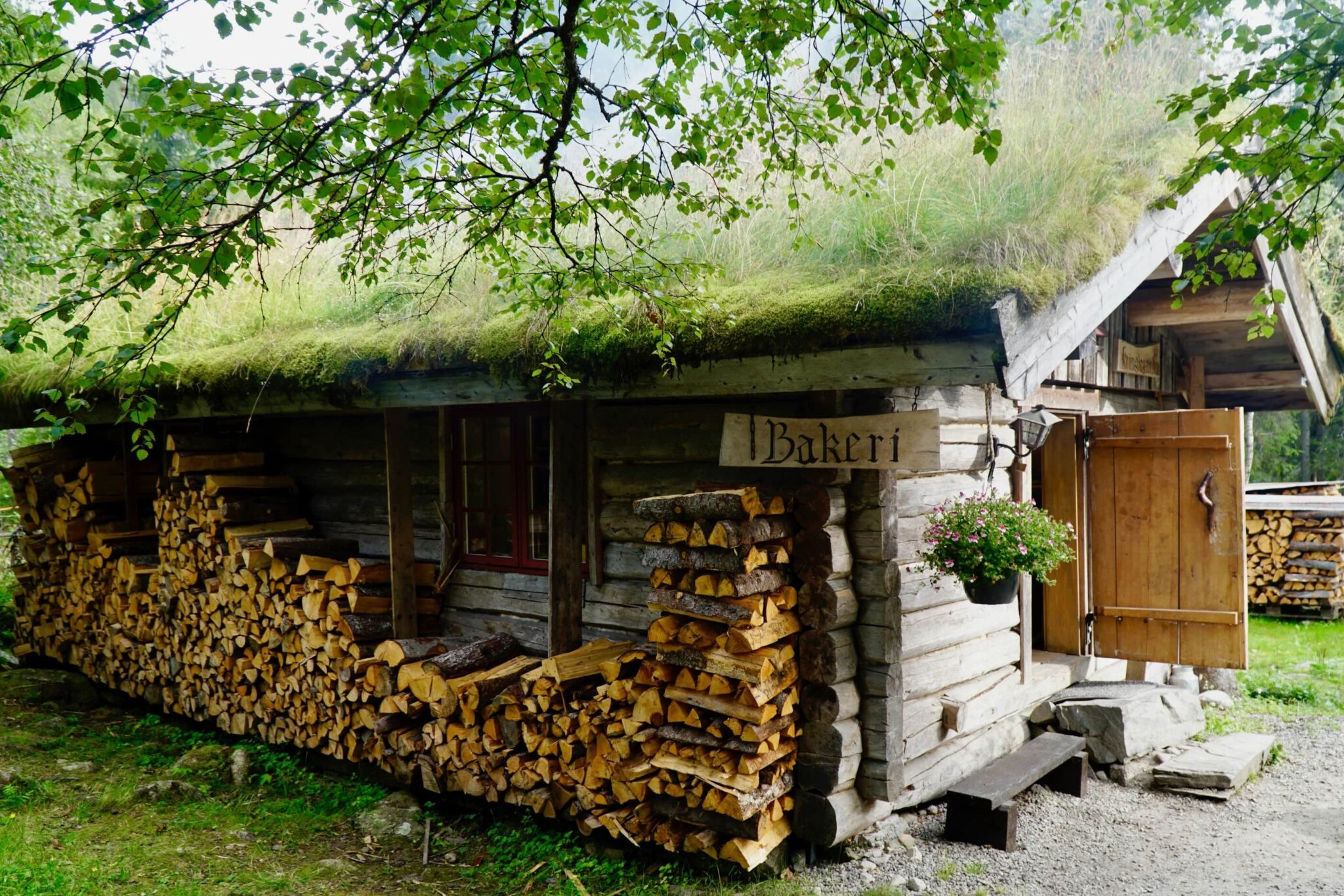
Jesper Gøtz is a passionate baker who loves the craft of baking. This love has led him to open his own dream bakery just north of Copenhagen, Denmark.
THE NEIGHBORHOOD— CURATED BY THE INSTINCT OF INDEPENDENT ENTREPRENEURS AS CREATIVE DIRECTORS OF THESE TACTILE EXPERIENCES—HAS BECOME OUR PRIMARY THEATER OF SELF-EXPRESSION.‘MACRO- STATUS’ (THE CITY YOU LIVE IN) HAS SHIFTED INTO ‘MICRO- TRIBALISM’ (THE SPECIFIC STREET CORNER YOU FREQUENT).
Whether it’s international diplomats joining the queue alongside design-conscious creatives at minimalist coffee roasters in Seoul’s Hannam-dong (try the Milk Brew at GML (지엠엘)), or New Balance-uniformed content creators sipping lattes or kombucha spritz in a renovated 1939 modernist monument in Antwerp’s Sint-Andries hood: vibrant neighborhoods have become the city’s primary tastemakers.
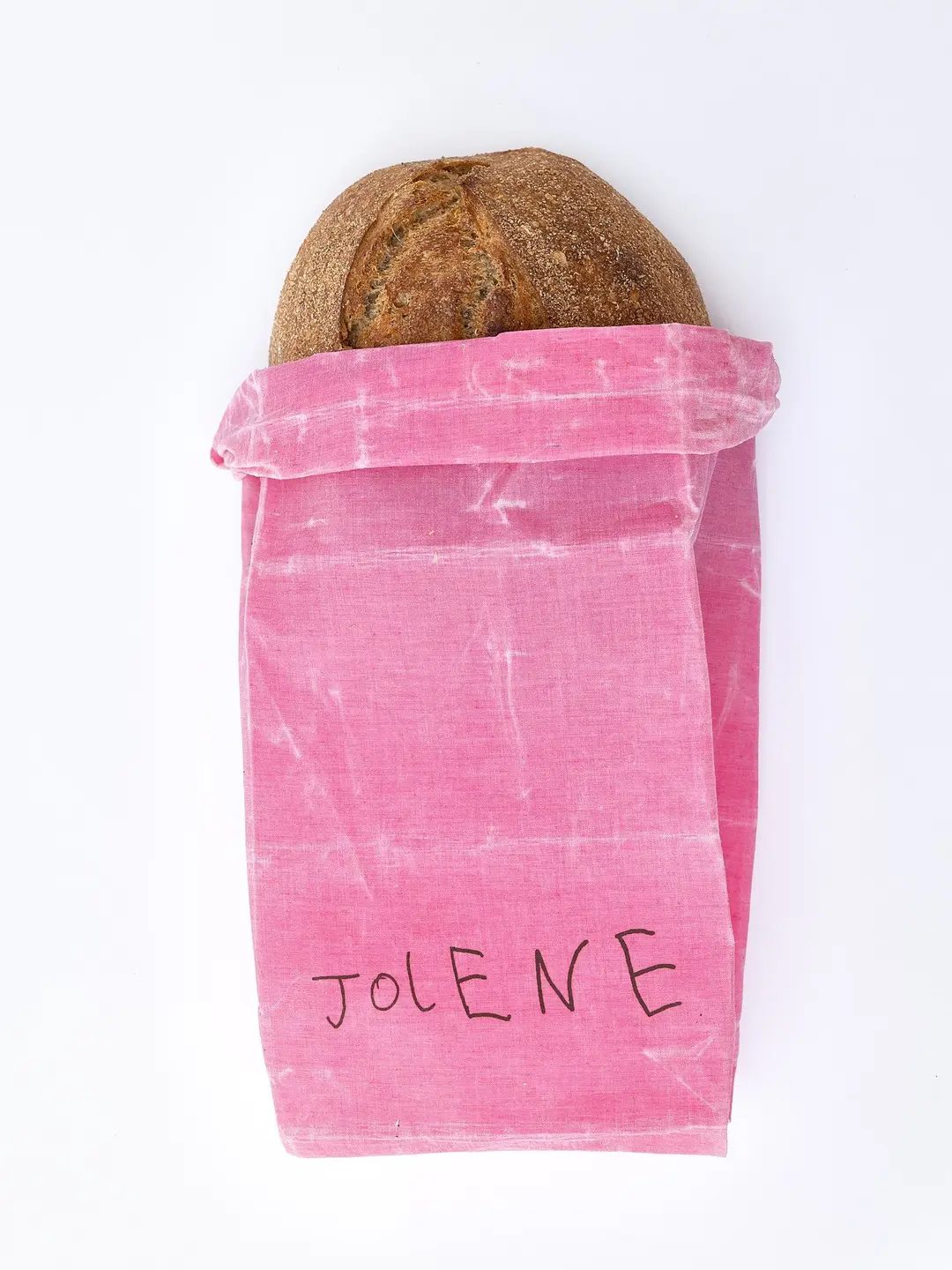
The iconic London bakery and coffee bar Jolene didn’t just pioneer the naïve, handwritten logo — made by the graphic designer’s six-year-old son — now a copy-pasted default from Mexico City to Munich. With its £29 reusable pink beeswax bread bag, the bakery is once again setting the tone for how urban bakeries may well present their sourdough loaves in the years ahead.Bonus points for sustainability (it’s biodegradable), and for a bright pink — not in a Barbie way, but beautifully weathering with age — status bag that loudly signals you’re buying your bread in the right place while investing in a reusable carrier.“A snug outfit for your loaf,” as Jolene puts it. The natural beeswax lining also keeps your loaves fresher for longer, preserving that prized outer crunch. Eye-rolling boomers may see an overpriced gentrification tool — but honestly, what’s not to like? Is the beeswax bread bag the next flex of sourdough-driven bakery culture? Yes. Maybe.
“That hand-drawn ‘Jolene’ style is partly a reaction to years of extreme minimalism and corporate branding,” says Graphic designer and founder of The Paper Goods Lisbeth Antoine. “It feels imperfect, and therefore more honest maybe? It’s almost a way of stepping away from branding altogether, or creating the illusion of ‘non-branding.’ But like any trend, it quickly risks becoming a formula. When everyone uses imperfection in the same way, it becomes another form of standardization. The question is not how something looks, but why it looks that way. Without a story, style becomes empty.”In her work for clients like ’t Kanon in Ghent and Batch in Brussels, she balances the timeless with the contemporary. “I often start from archives, old signage, or forgot- ten typographic references, reinterpreting them with modern clarity. It’s about crea- ting something familiar without literal nostalgia. I call it emotional continuity.” Nostalgia has arrived—a sentiment domi- nating both the runways and the kitchen. From the revival of ‘grandma’s kitchen’ (reimagined in premium finishes) and brown-toned bistros with retro hi-fi, to the sandwich renaissance and Lisbeth’s own Paper Goods brand. An elegant reminder of handwritten notes and formal name cards. “The Paper Goods started from both desire and frustration,” Lisbeth notes. “The desire for true connection and a mindful moment. The frustration that we communicate more than ever, yet say less. Everything is fast, disposable, forgettable. Handwritten com- munication is radical today; it requires time, vulnerability, and presence. It’s not about being old-fashioned, it’s about ma- king intimacy personal again through a modern aesthetic. Instead of sending a quick emoji while you’re struggling behind a screen, it’s about sitting still to actually write your thoughts down.”
@the_papergoods
Click here for Lisbeth's favourite hangouts in her hometown Saint Gilles (goes live 3th week of April)
GLOBAL CITIZENS NOW PRIORITIZE LOCAL BAKERIES AND ‘PAVEMENT CULTURE’ OVER NATIONAL GDP. THE SOURDOUGH BAKERIES, NEW-GEN MERCADOS, ARCHIVAL- AND BOOKSTORES, NEO-GASTRO PUBS AND LISTENING BARS YOU QUEUE UP FOR DEFINE THE TRIBE YOU WANT TO BELONG TO.
And it's also where you'll find your print edition of thelist. Let us guide you through some of our favourites in the Kingdom.
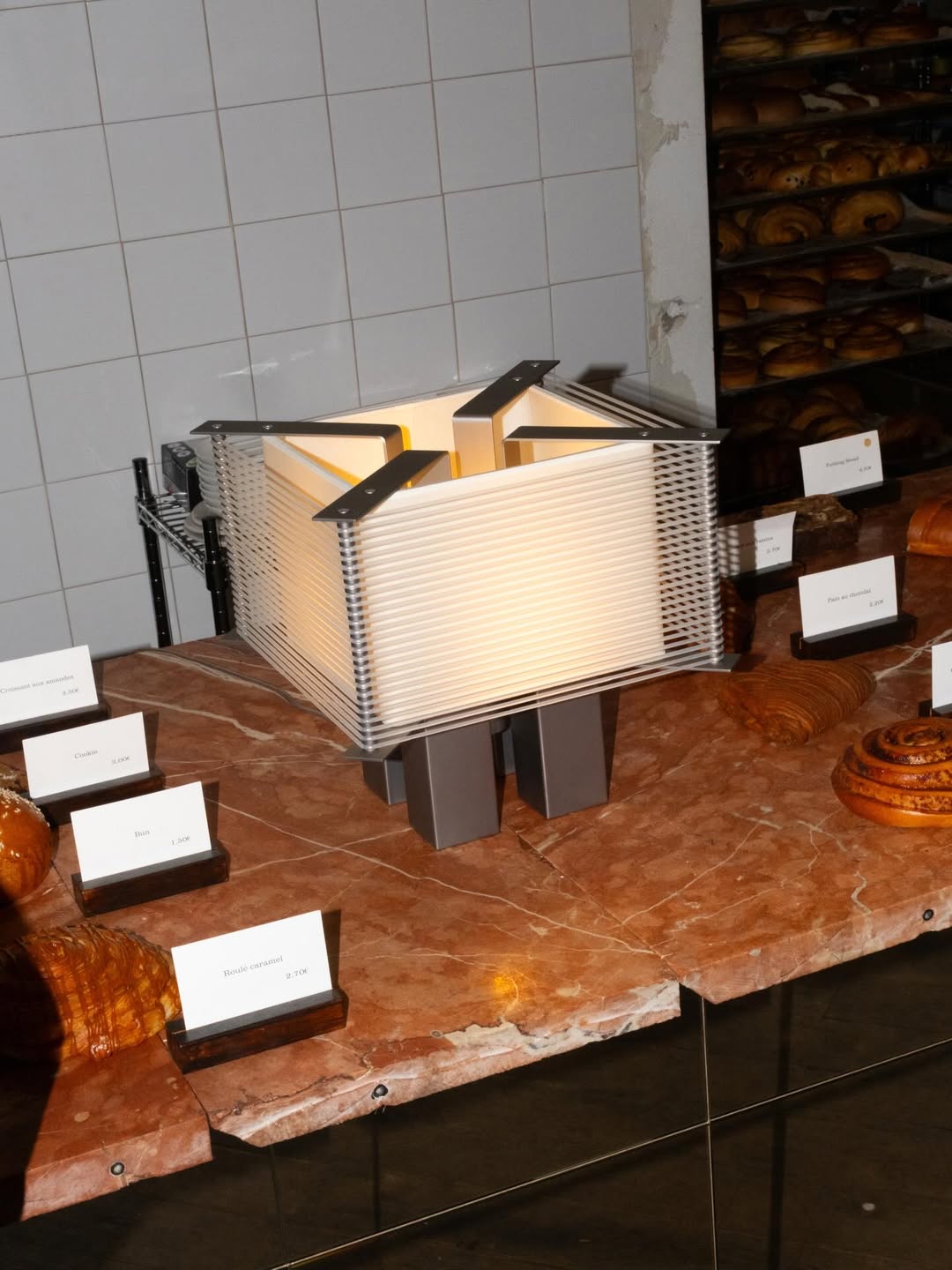
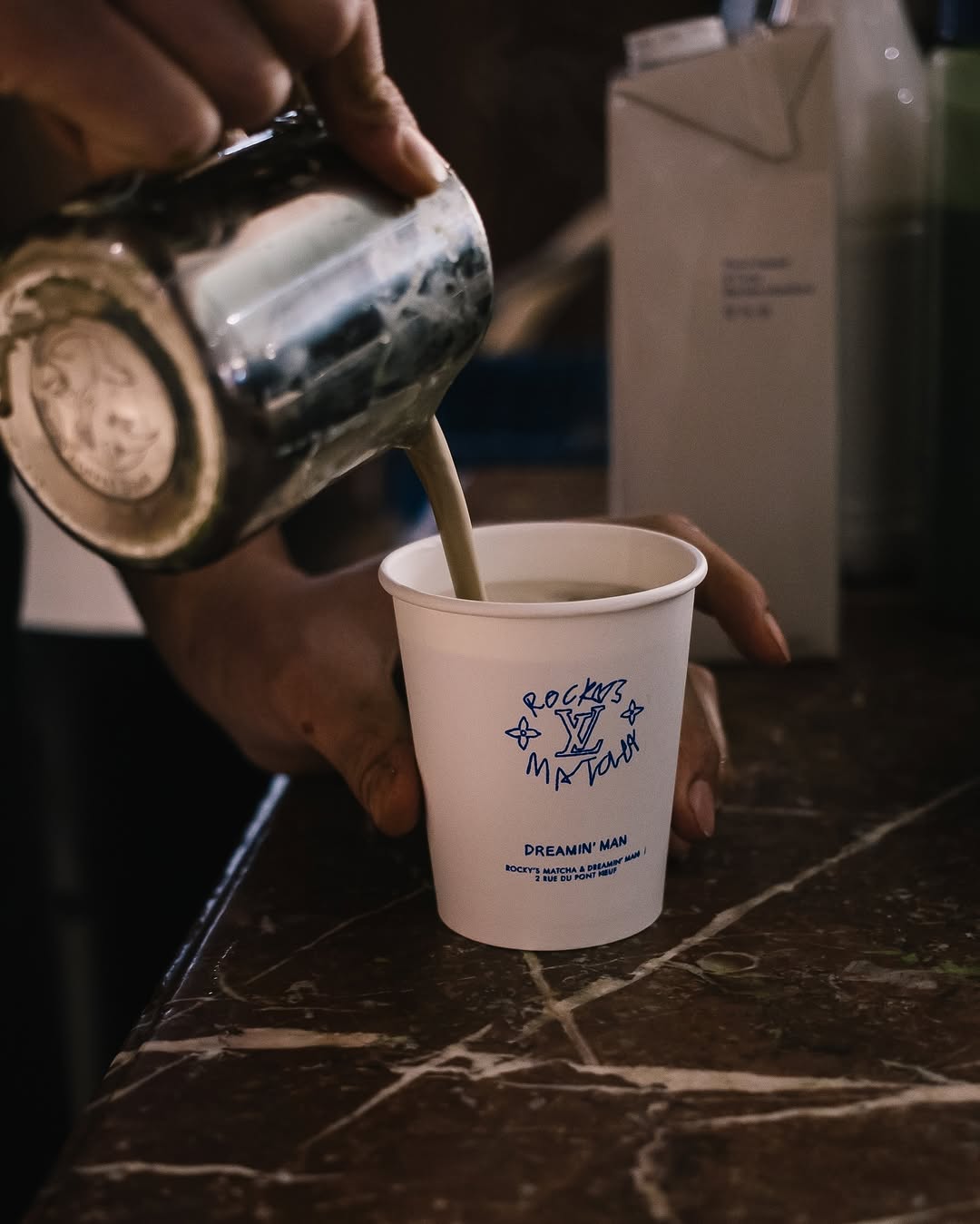
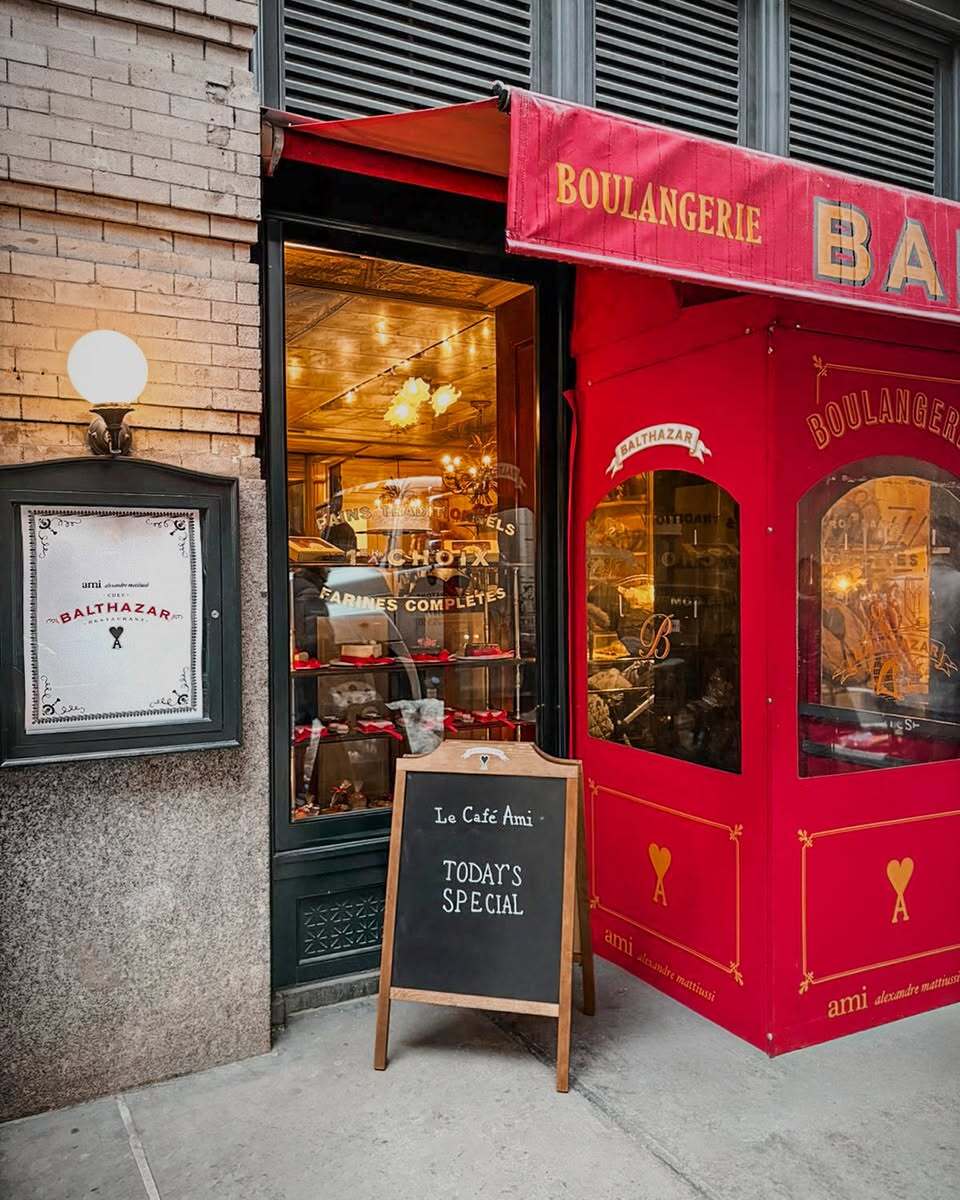
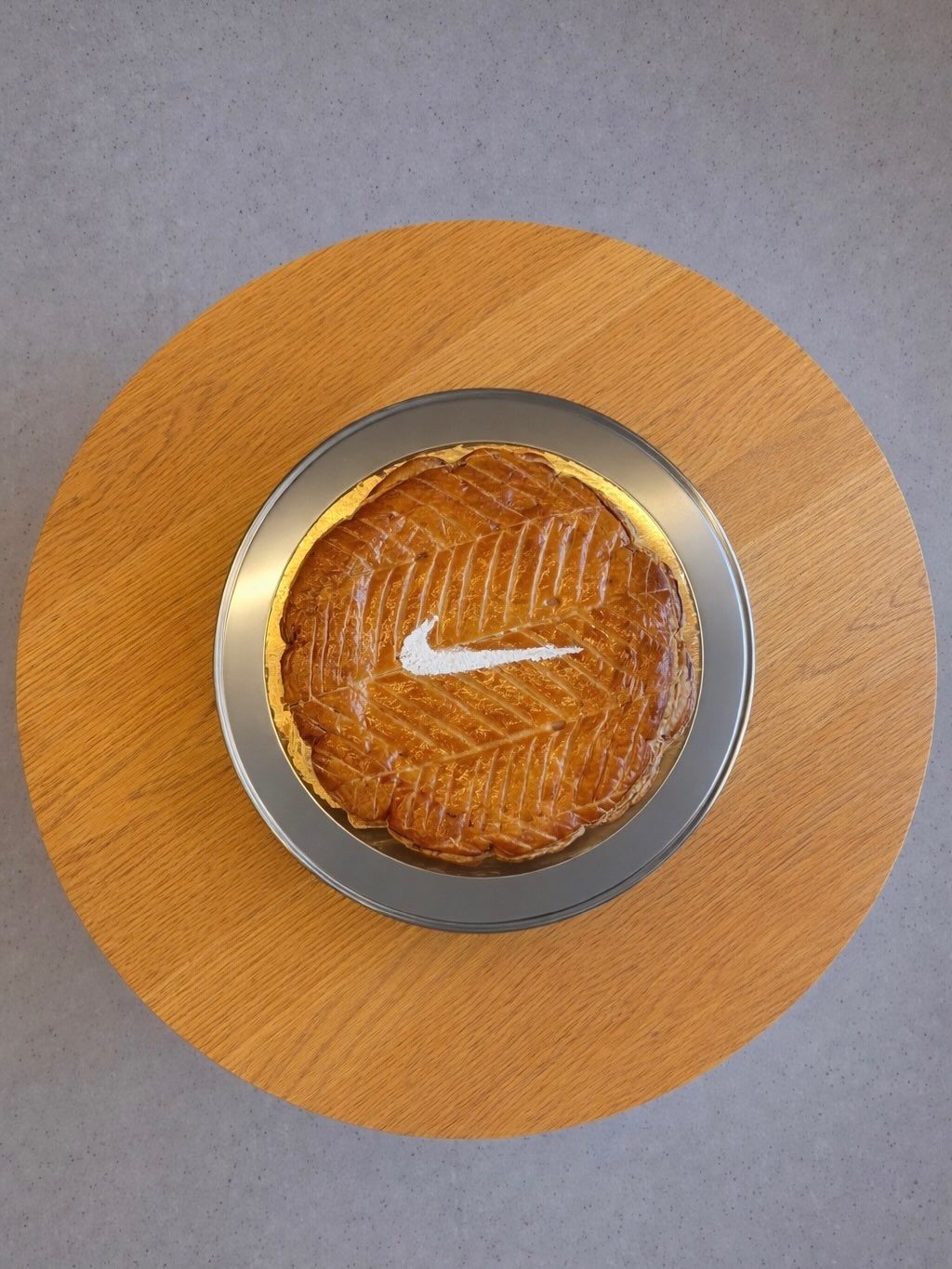
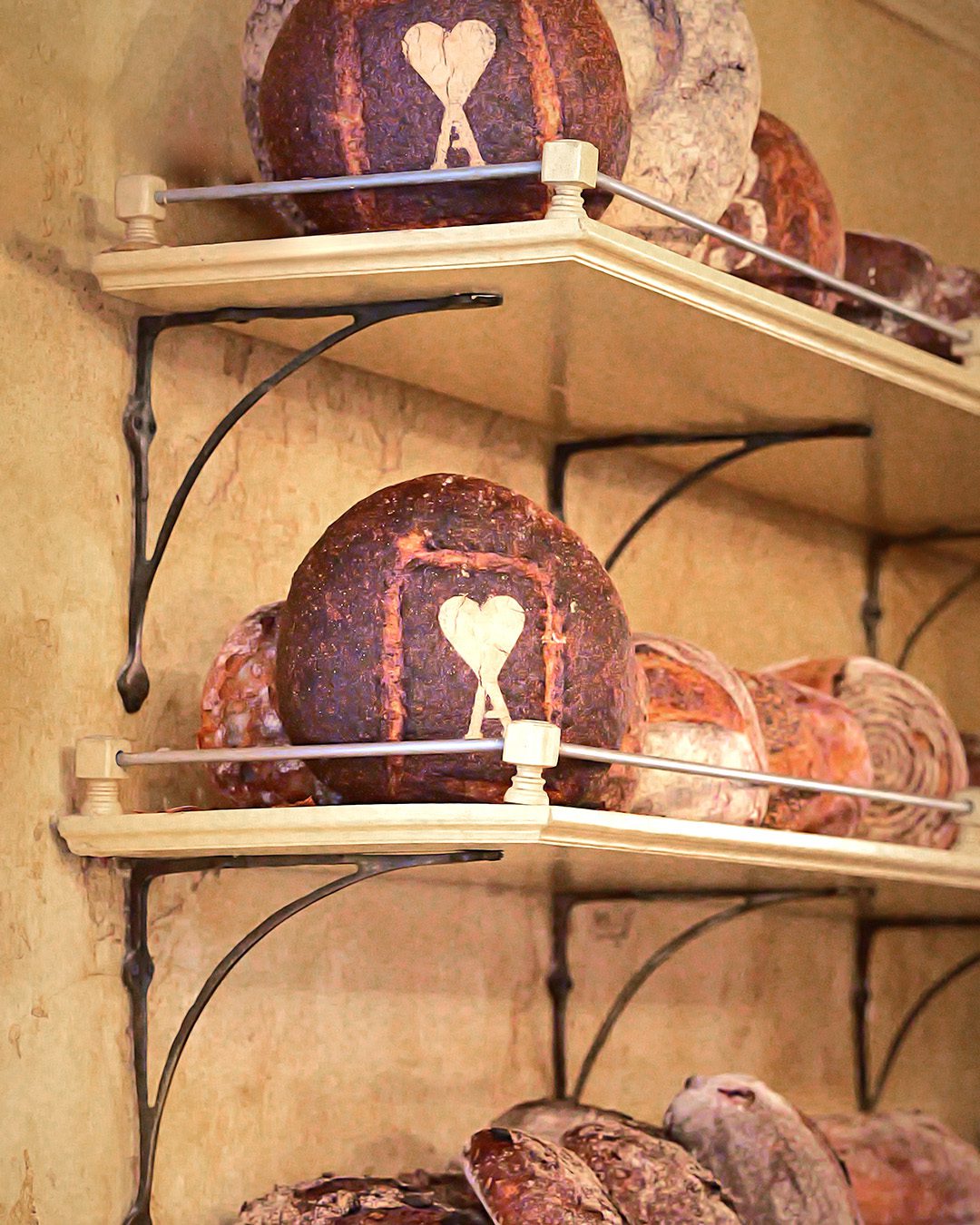
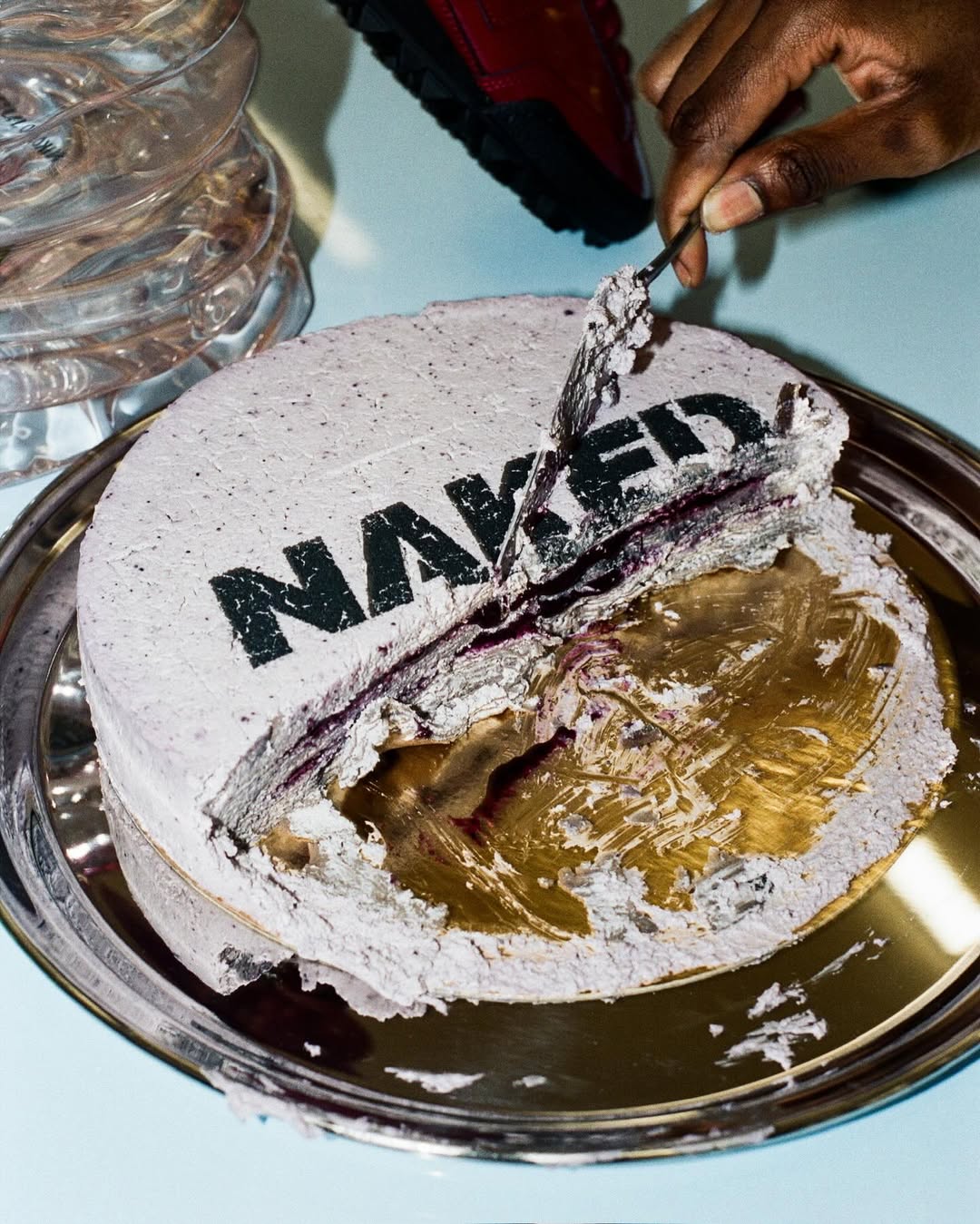
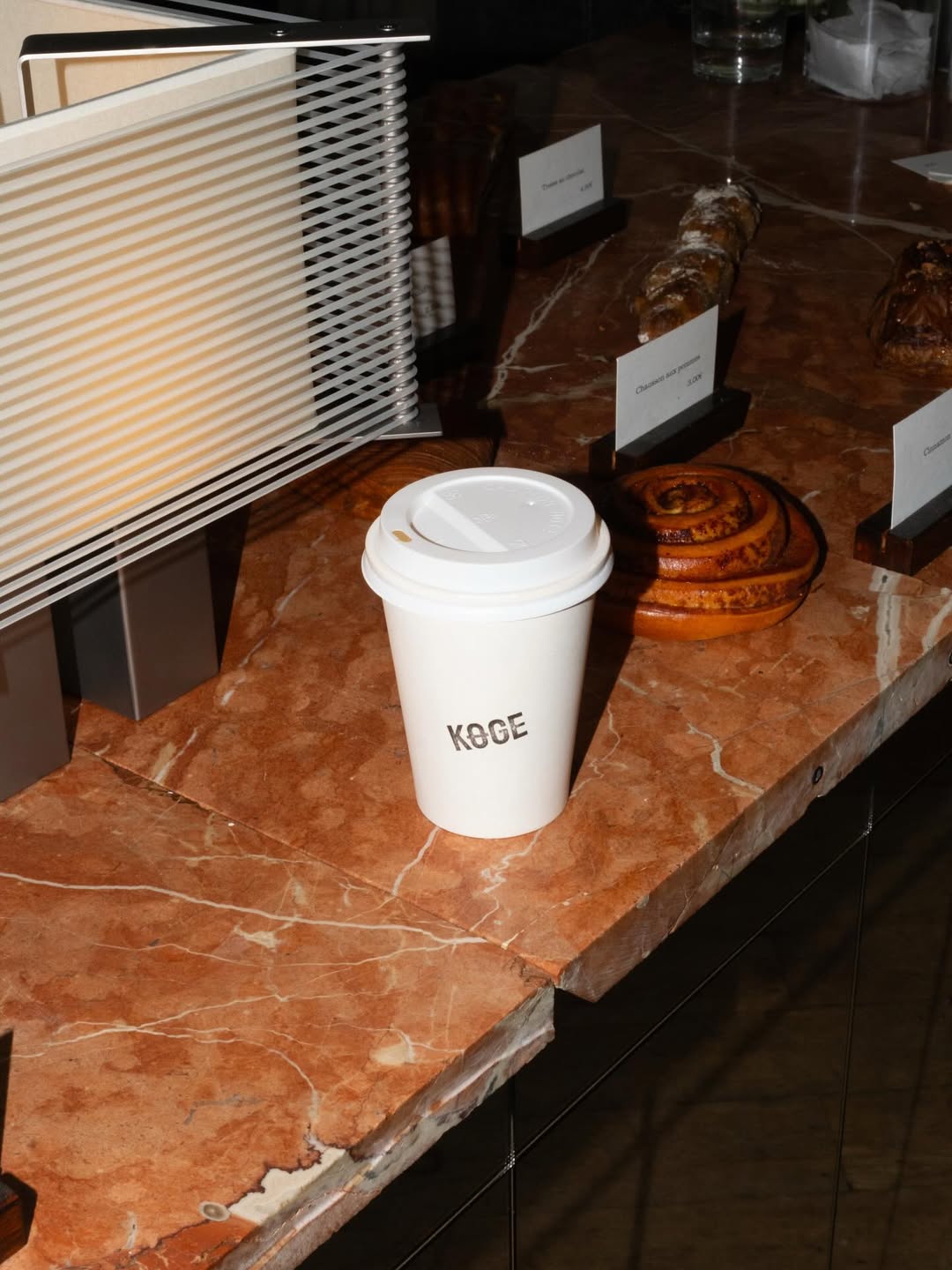
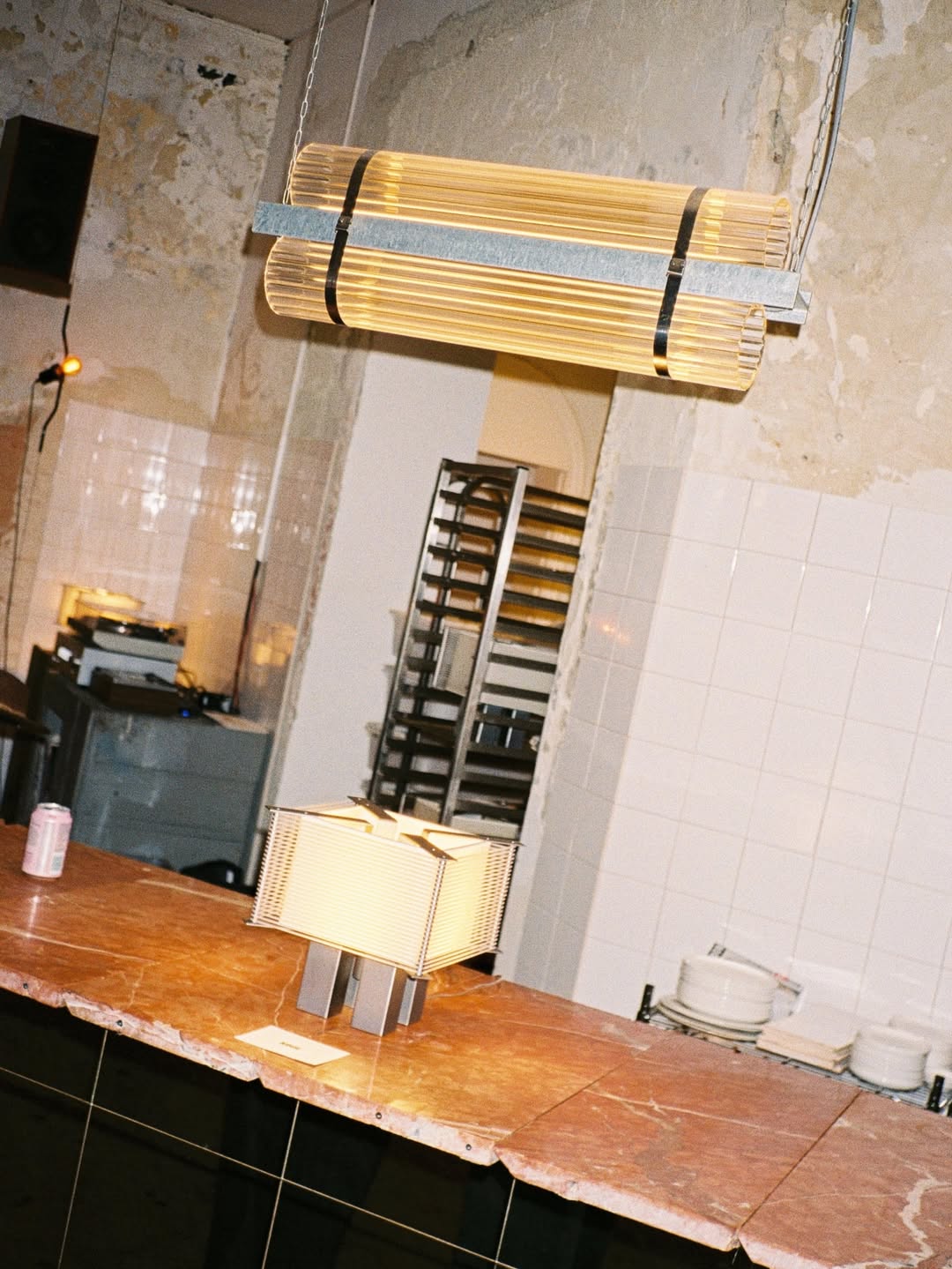
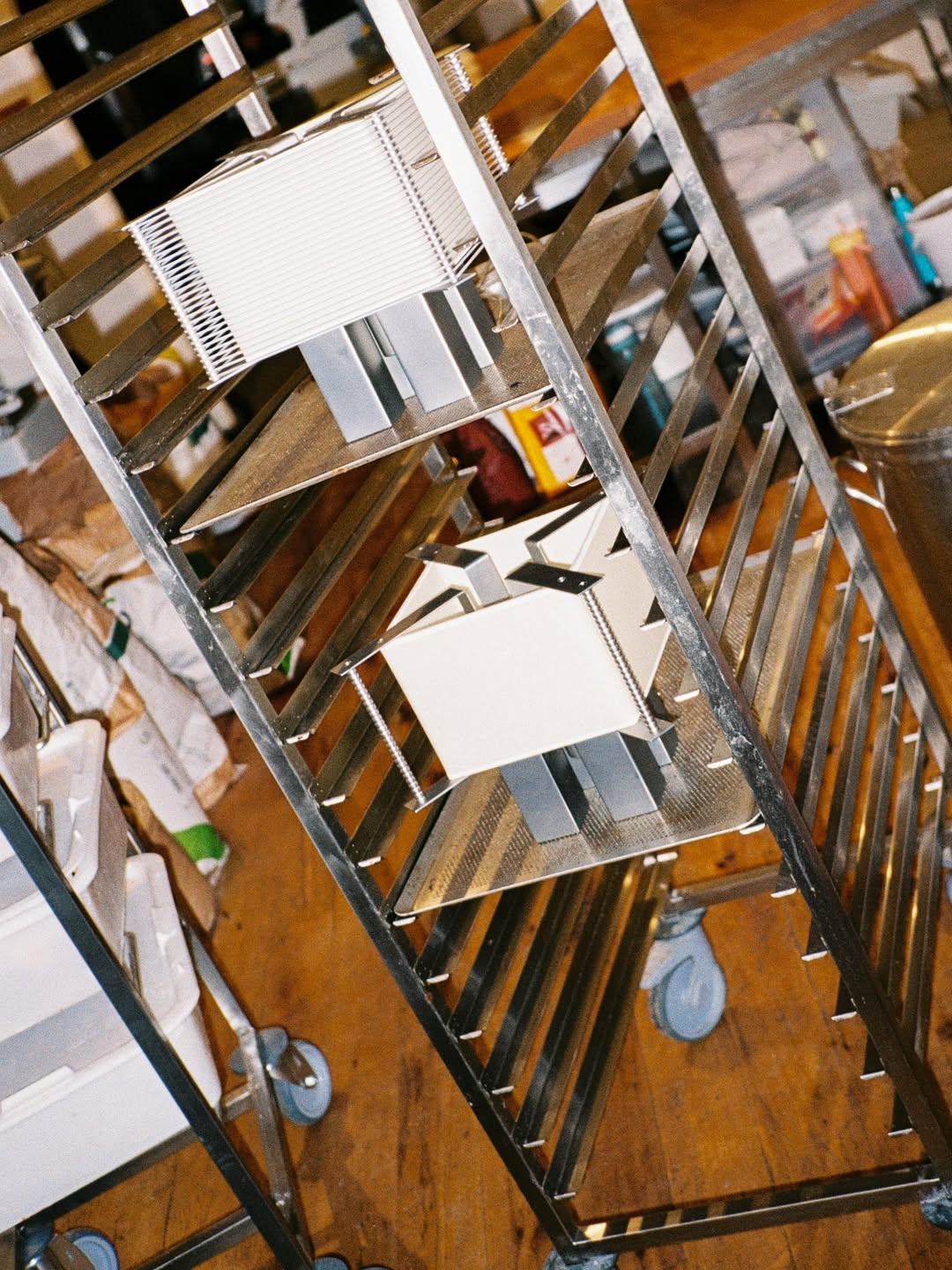
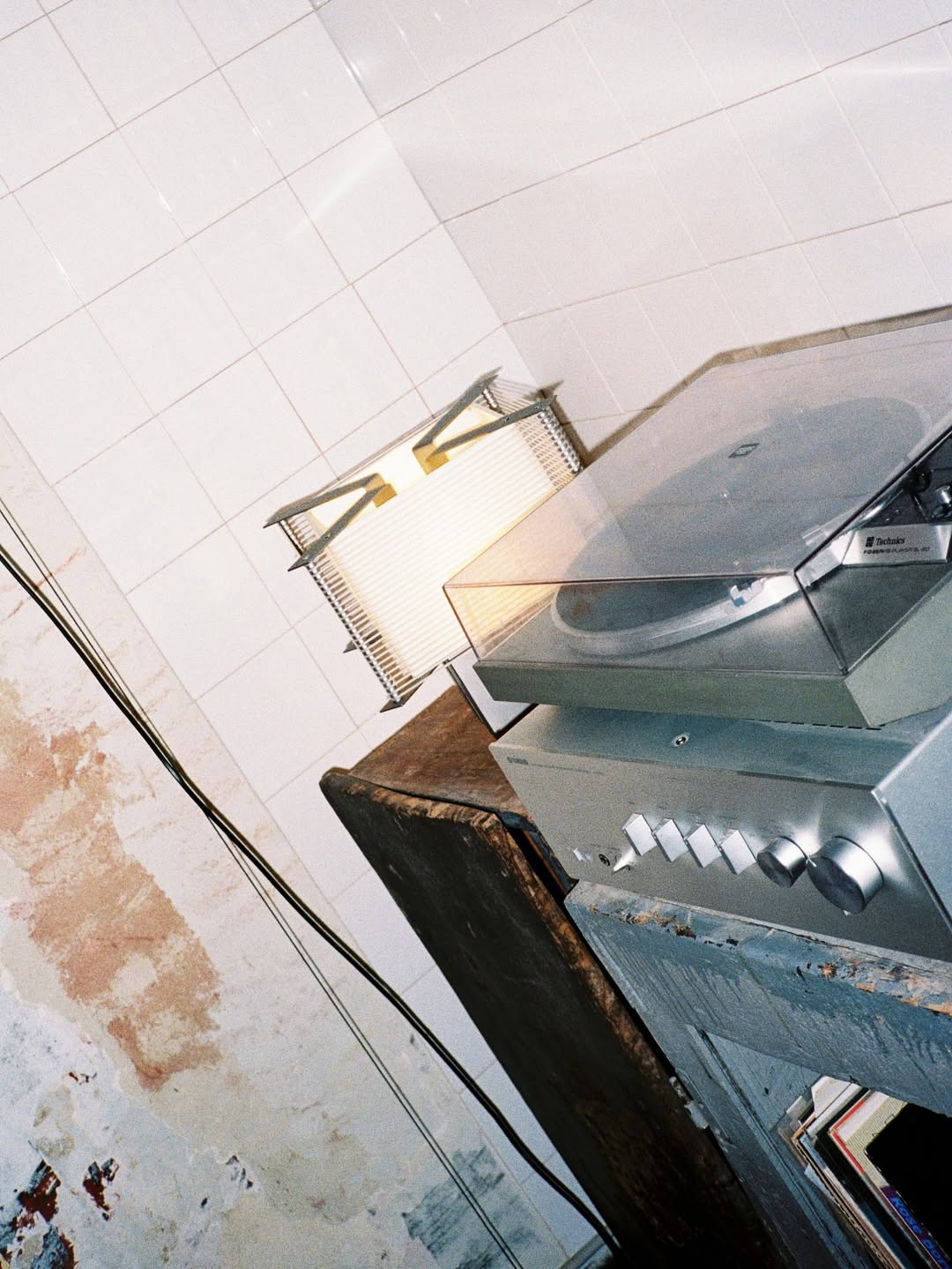
For some time now, fashion and design brands have embraced both the craft and the growing cultural influence of the modern bakery and coffee bar as a neighbourhood hub. From Amy briefly taking over New York’s Balthazar Bakery to collaborations between Louis Vuitton and the legendary Dreamin’ Man coffee bar, and Køge Design presenting the newest Boxing Ring Lamp 081 between the cinnamon rolls at Grain bakery in Brussels, pastry and coffee have emerged as an unlikely cultural connector.
“The same audience enjoying that focaccia or a hot cross bun is often the one appreciating great design,” notes Køge Design co-founder Hadrien Bindels. Not coincidentally, they presented their newest Boxing Ring Lamp 081—a design by Matthieu Doucet, founder of Imprécis—between the cinnamon rolls at Grain. “It felt like a natural fit.”
@koge.design
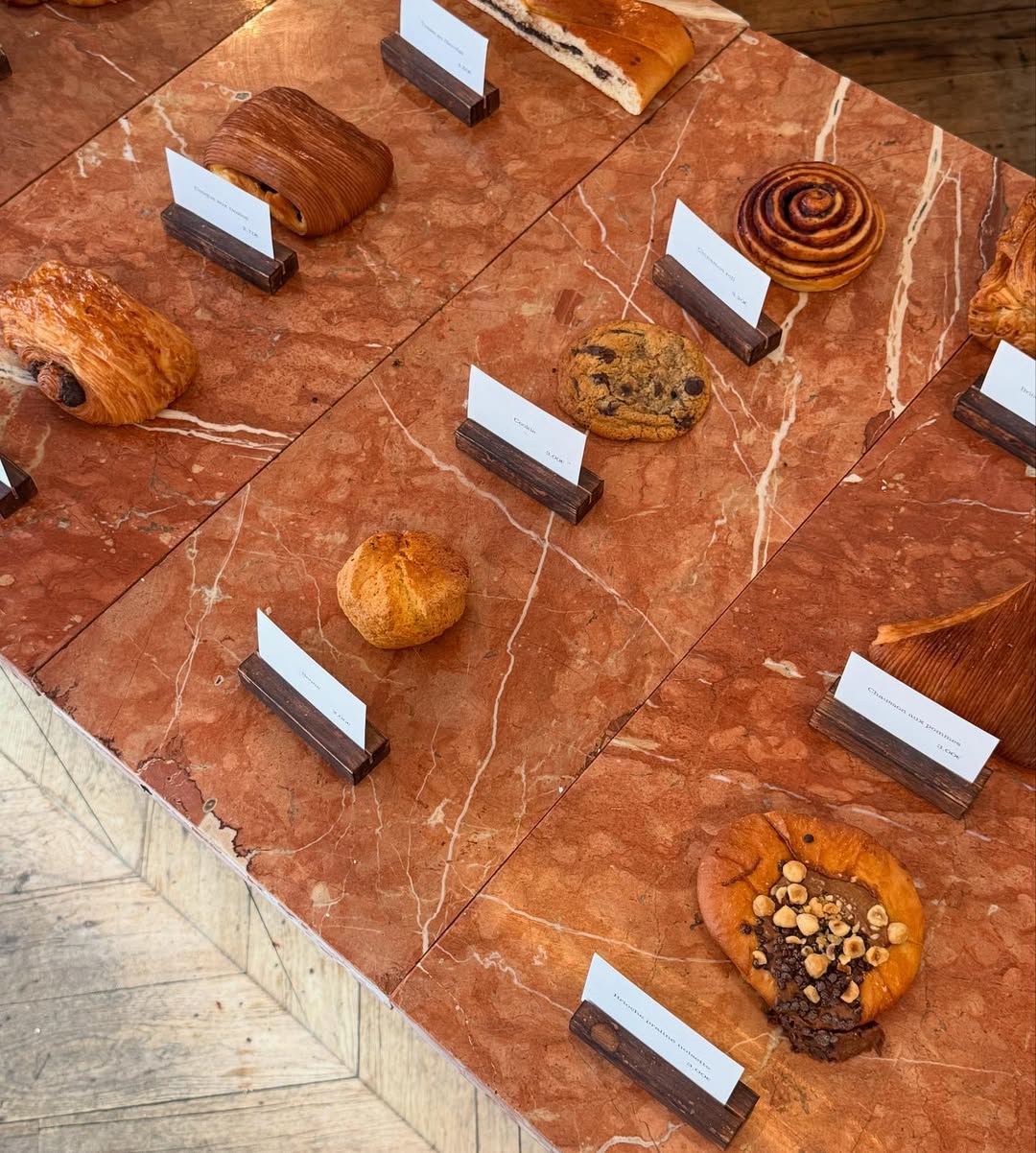
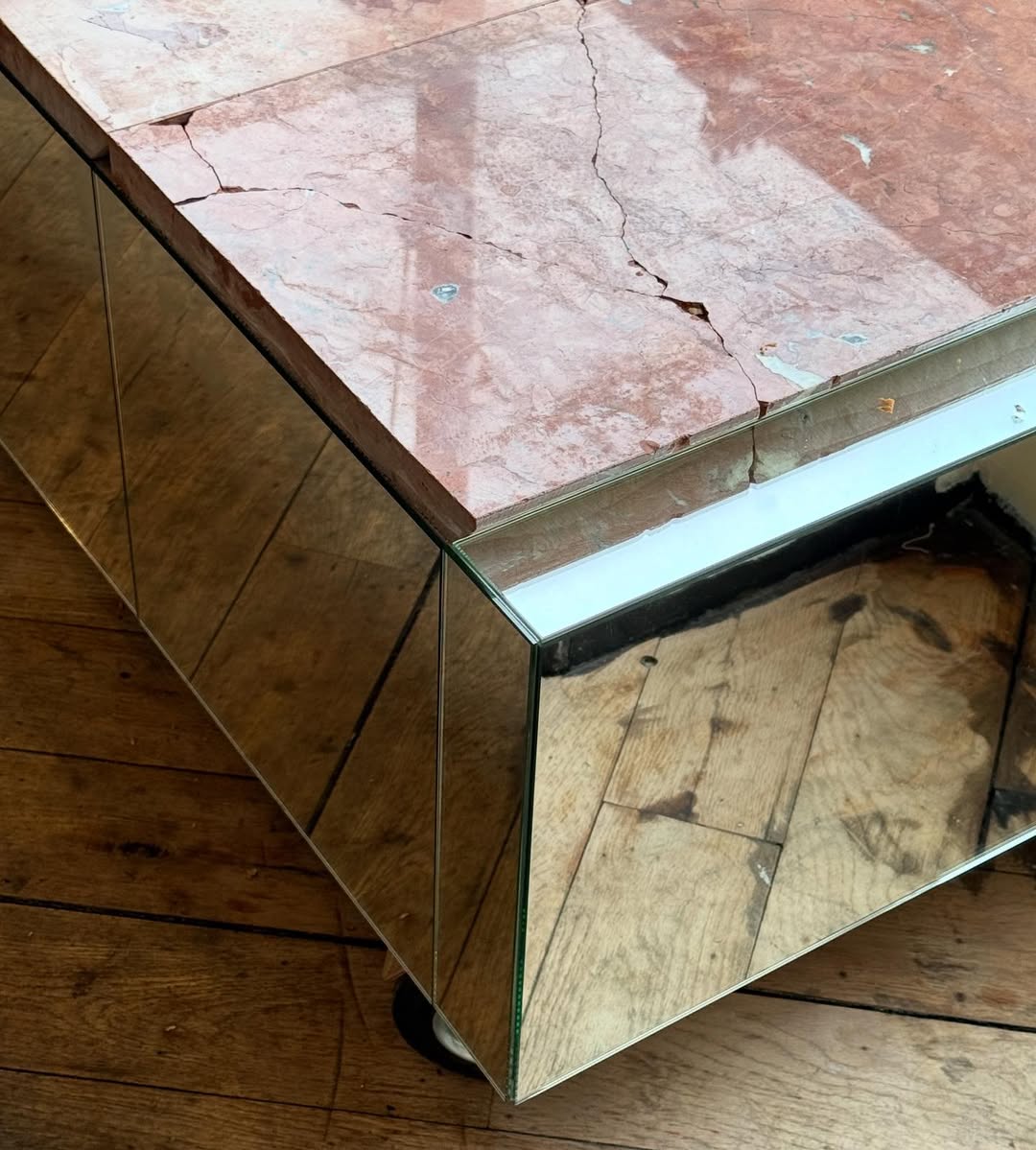
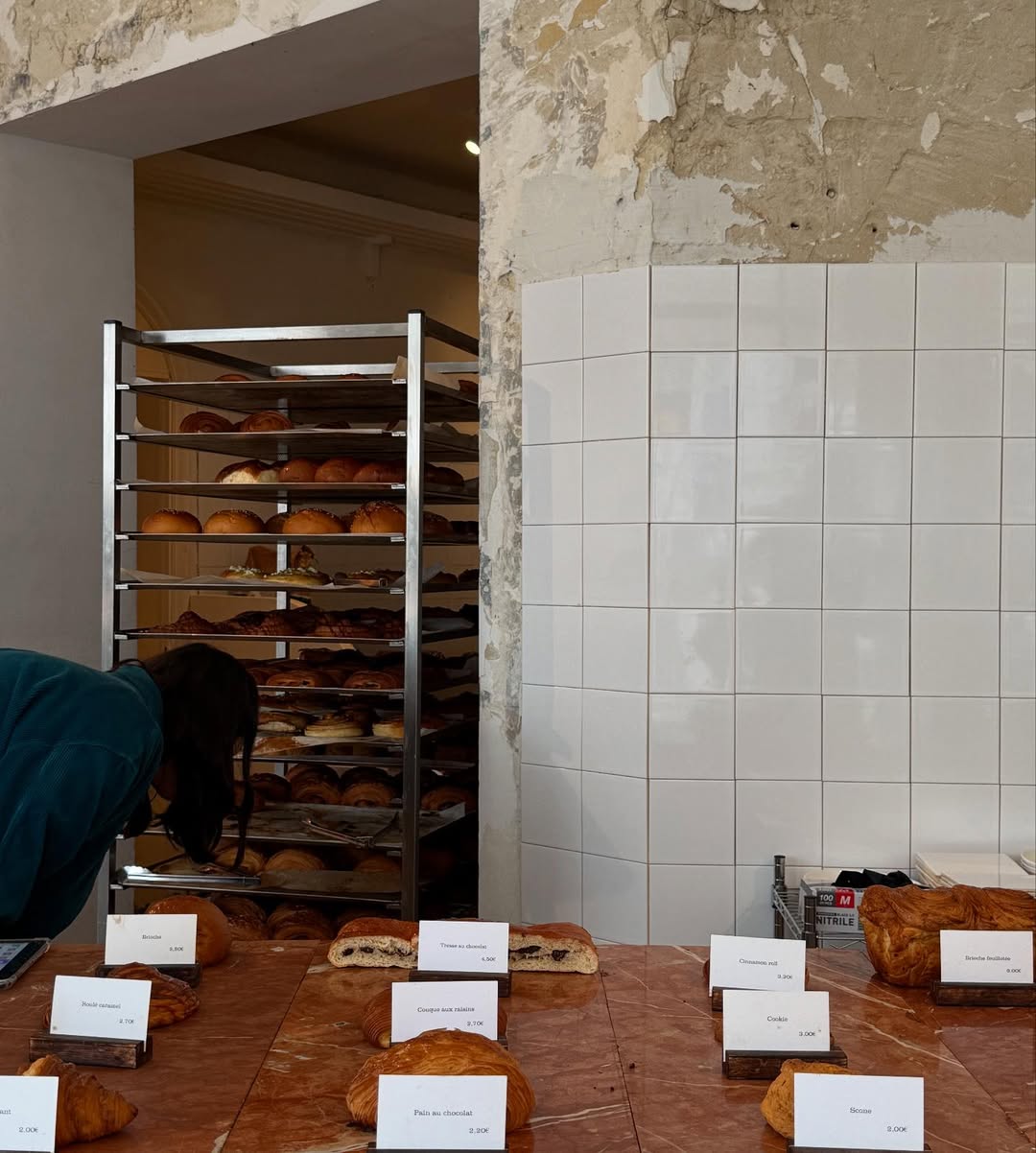
“With no fewer than three architects by training in our team—including me—it’s probably no surprise that we’re interested in everything that touches art,”says Grain co-founder Victoria Depré.
“Of course, it all starts with good products and good people. Our goal is simple: to brighten our customers’ day with a perfectly baked brioche or a still-warm loaf of bread. Seeing the same people every day and knowing their order by heart is actually one of my favourite parts of owning a bakery. It makes me feel part of my neighbours’ daily lives—and that our bakery truly matters in the neighbourhood. There are kids I saw grow up in the five years we’ve been open and that greet me when they see me at the grocery store and nothing feels more fulfilling than knowing I’m part of their childhood happiness.”
@grainbakerybxl
"The bakery market has evolved massively over the last few years, especially in cities, with social media playing a huge role, notes Laurent Maes of Renard Bakery in Ixelles."New, trendy concepts are popping up everywhere and high-profile pastry chefs have become actual Instagram stars. People even plan their holidays around visiting specific bakeries now—something that was unthinkable before."
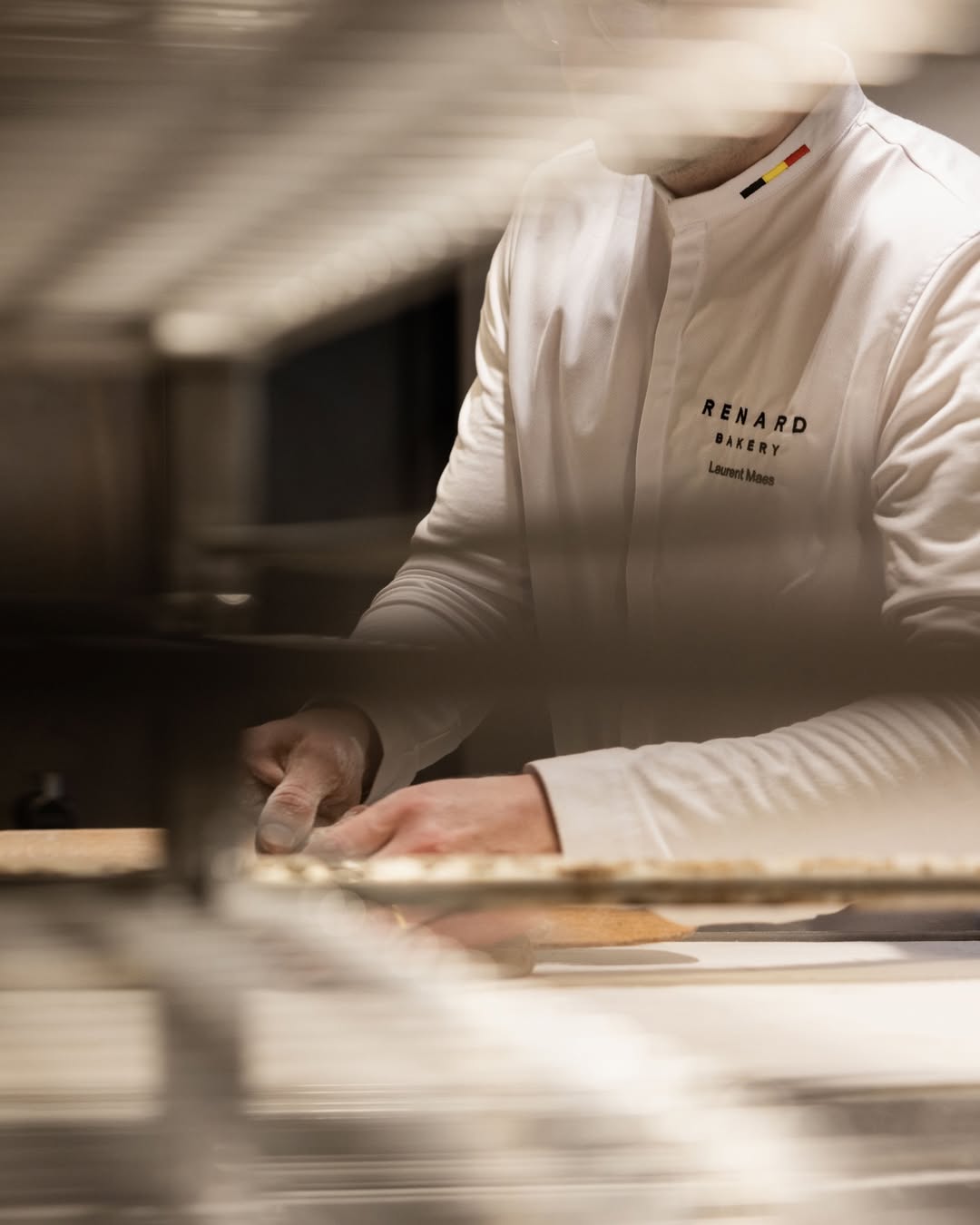
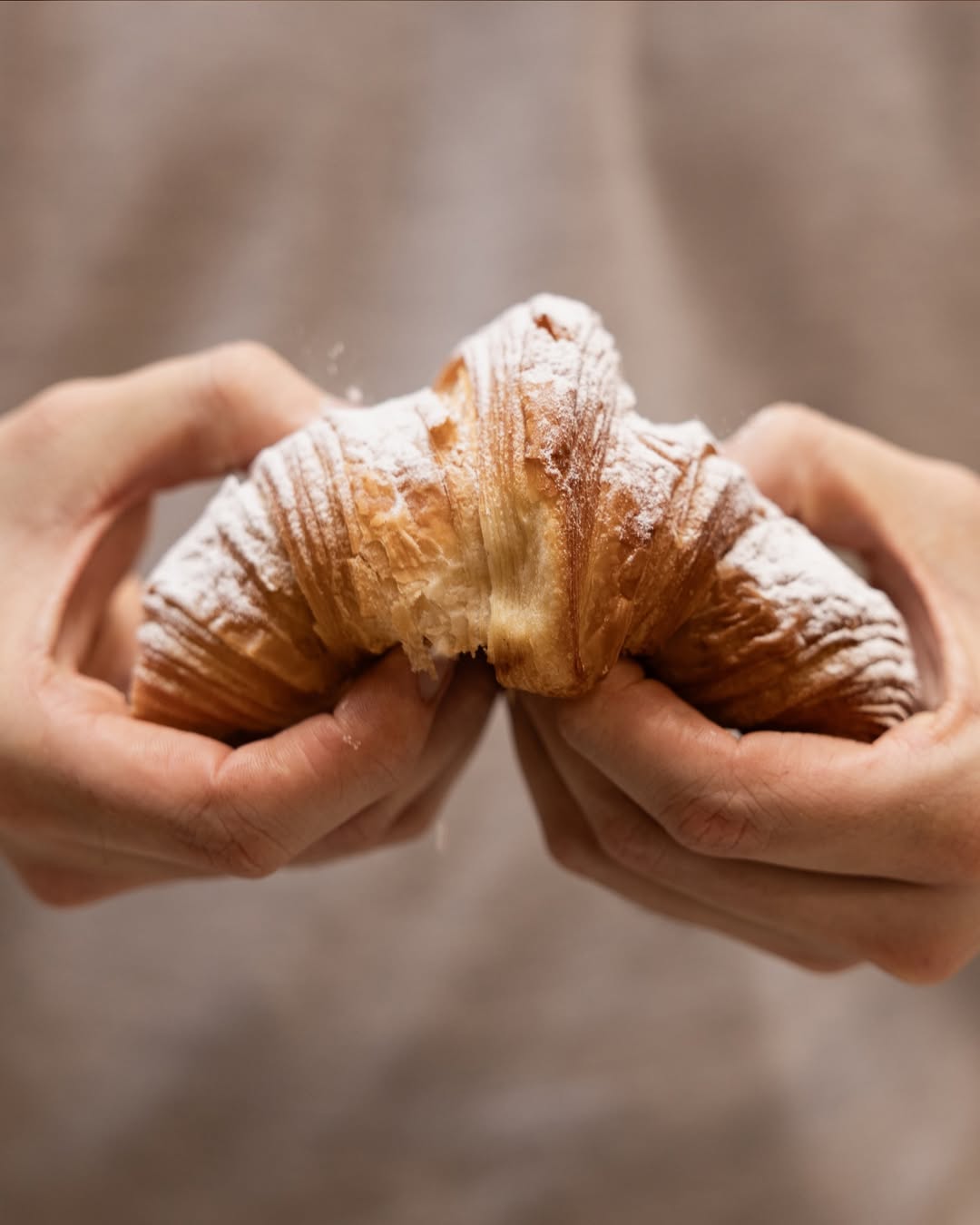
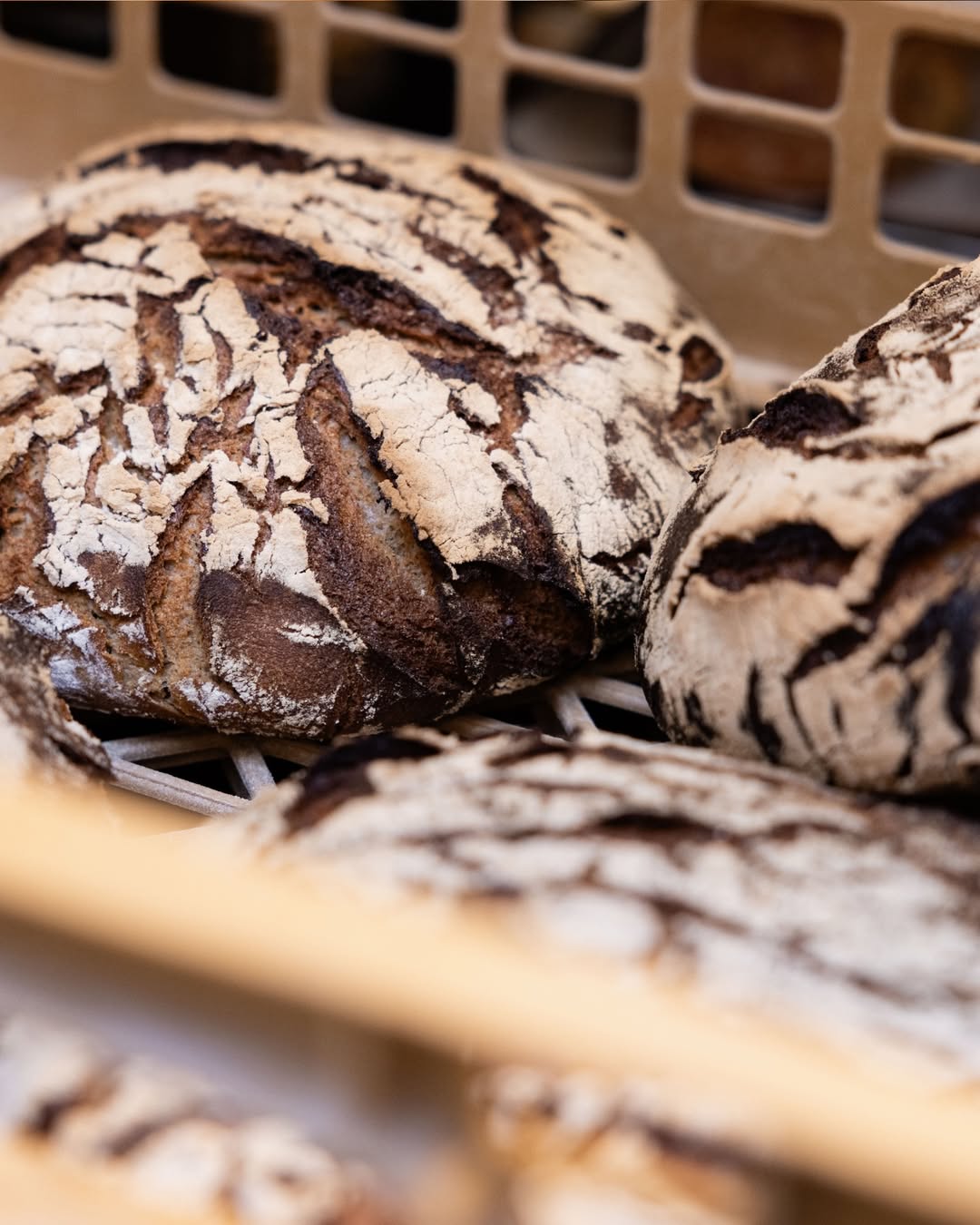
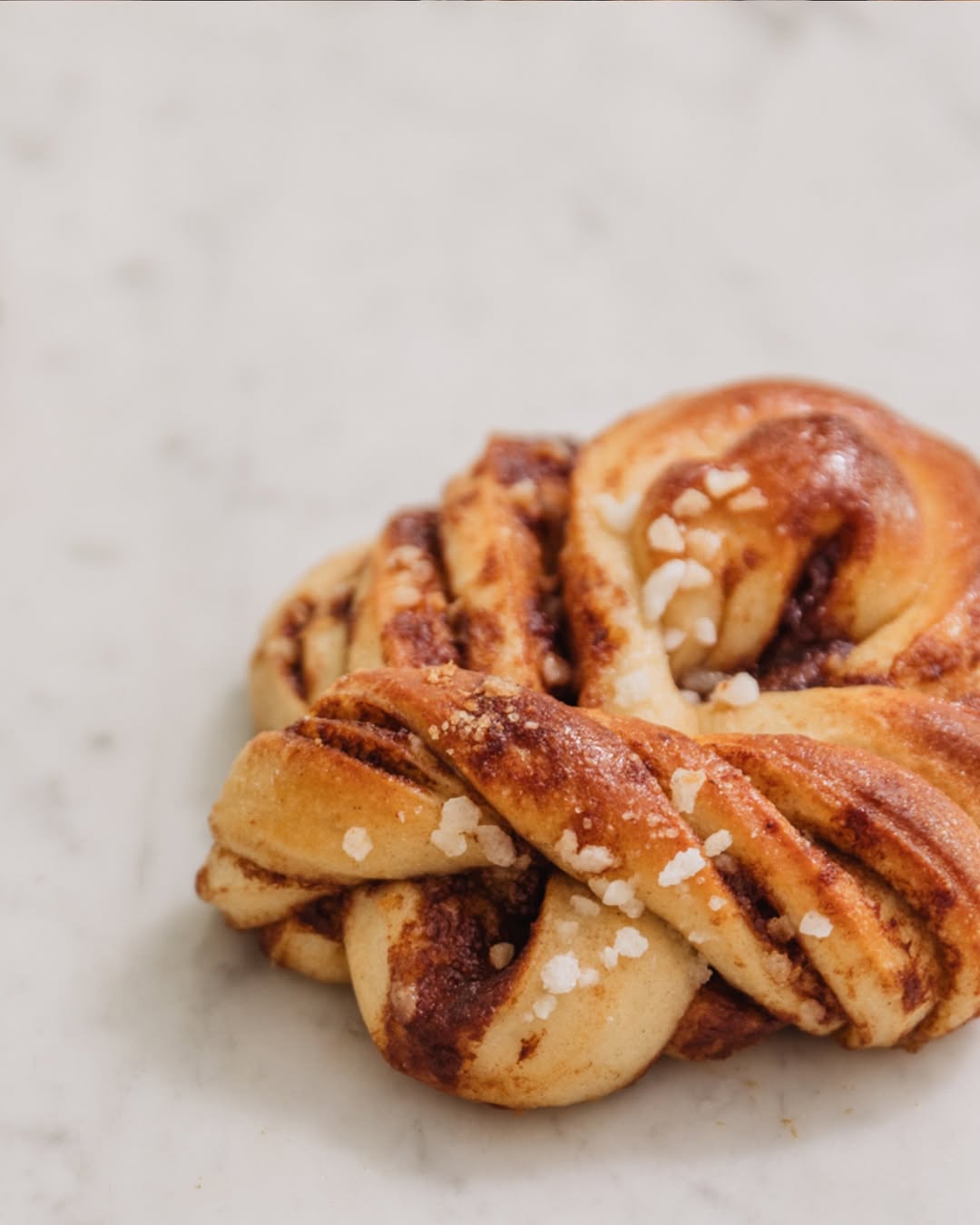
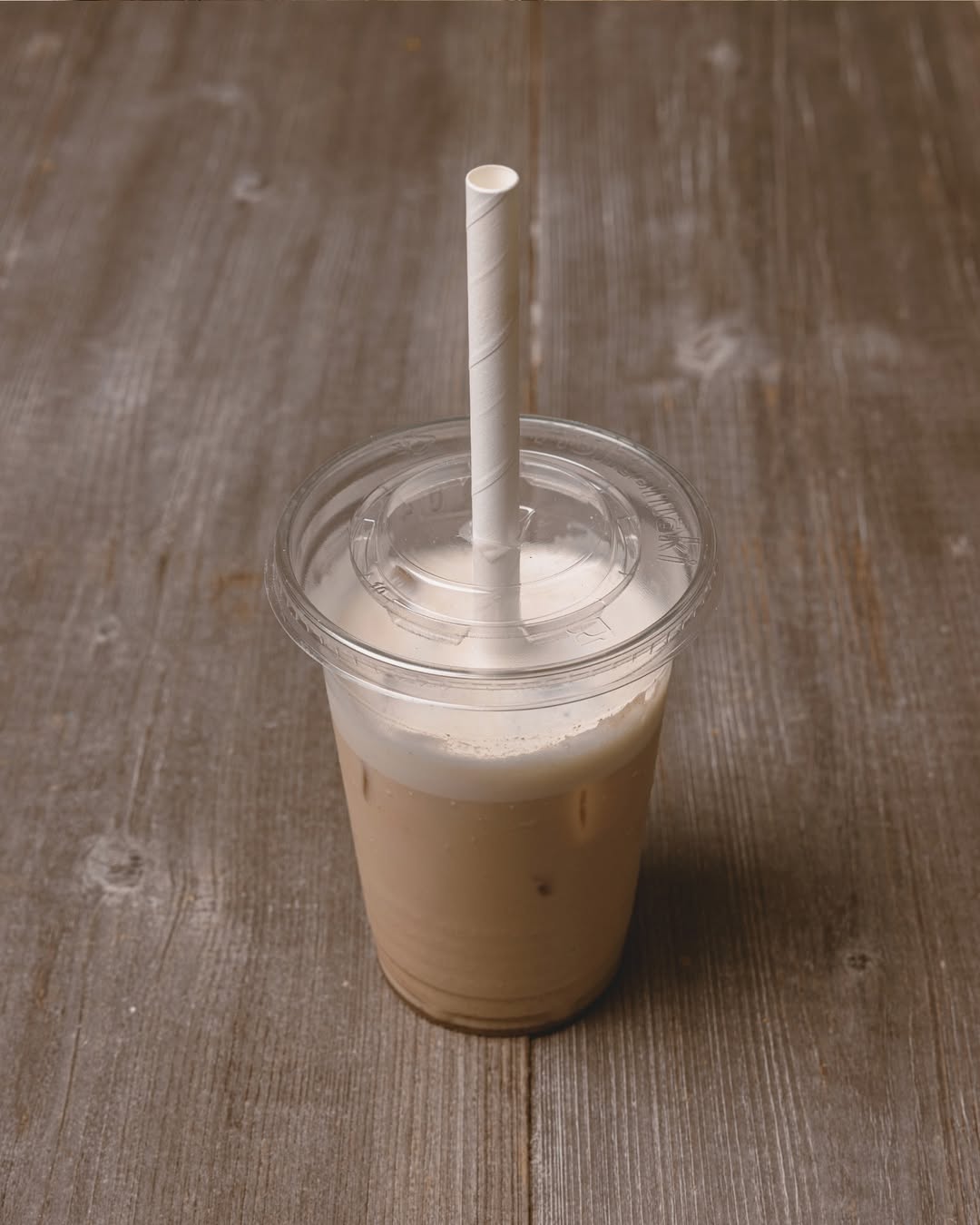
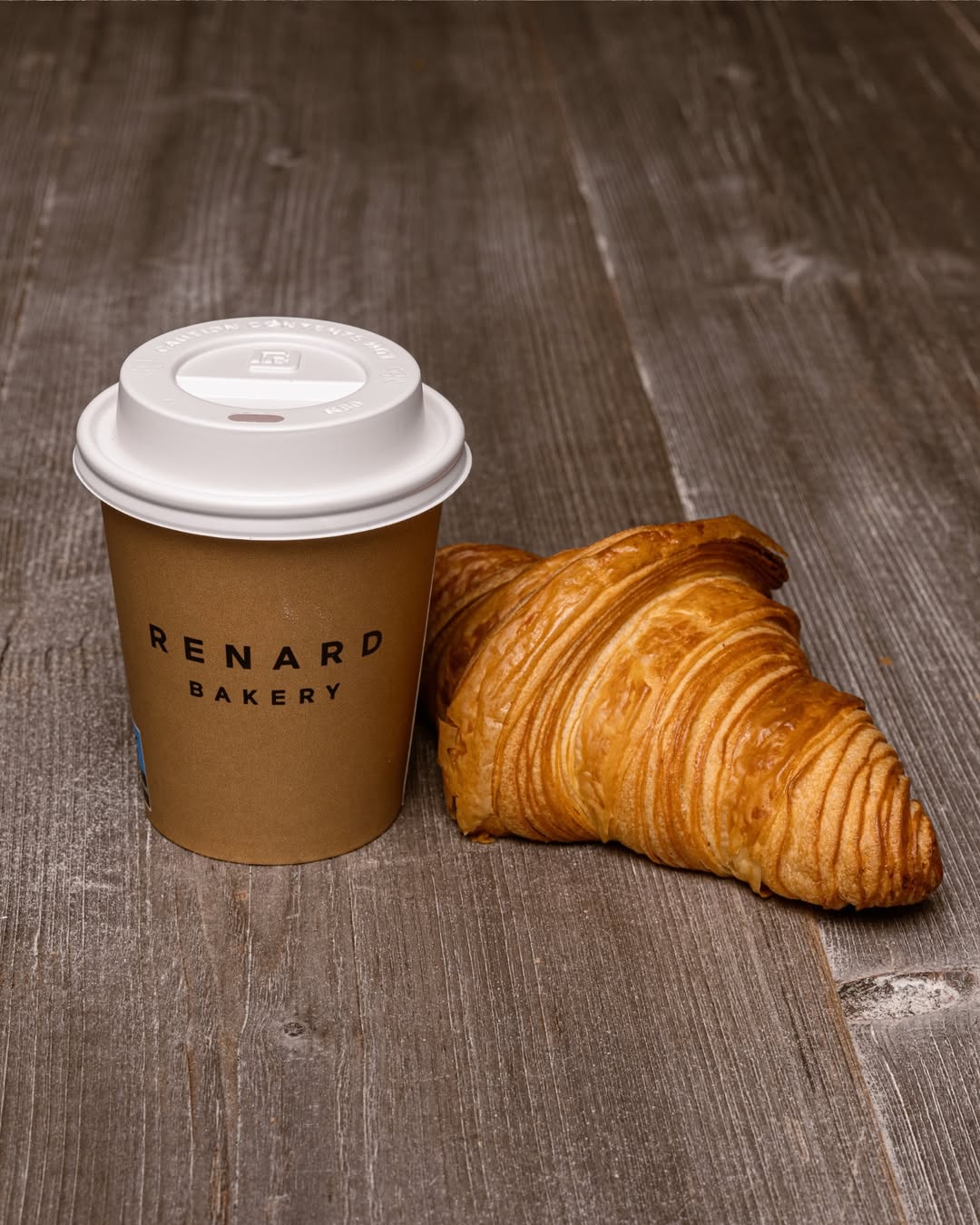
"The neighborhood is vital for a bakery, just as a good bakery is vital for its neighborhood. It’s a place where people meet, where daily routines take shape. That local character remains essential to us. Ixelles is a cosmopolitan area with a real grassroots feel. You run into everyone here. In recent years, we’ve also noticed a clear rise in the expat community, which adds to a very diverse mix of customers."
Laurent.
@renardbakery
In Knokke-Heist, the arrival of BOB’S ARTISANAL BAKERY proves that a modern bakery/coffee bar can transform a neighborhood. While Knokke-Heist is primarily known as a classic, sophisticated Vuitton-clad coastal town, ‘le nouveau Heist’ claims its spot as the rock ’n roll sibling of the Knokke neighborhoods. Bold, aspiring architecture and the scent of freshly toasted sourdough set the tone.
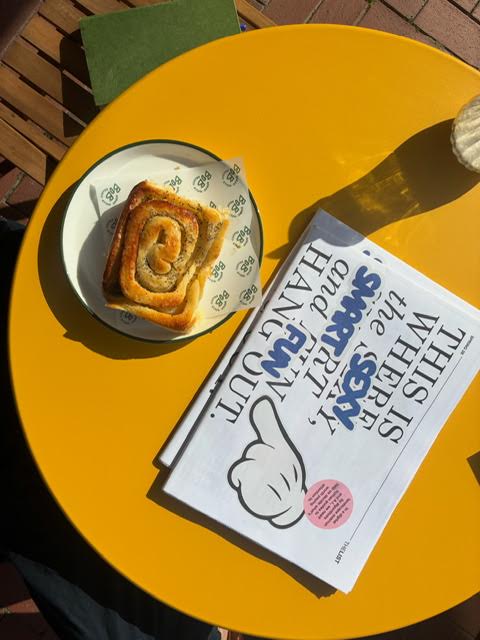
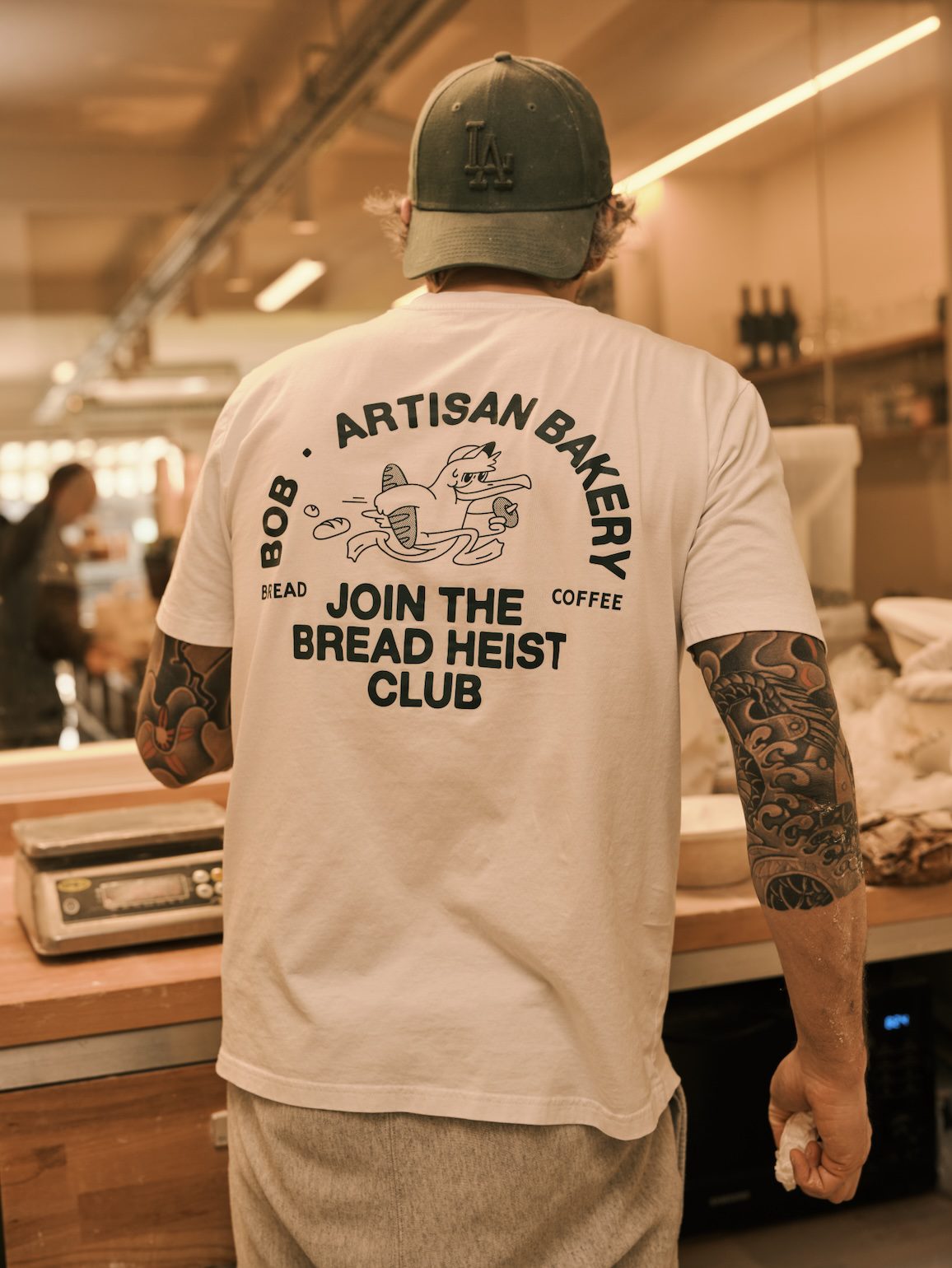
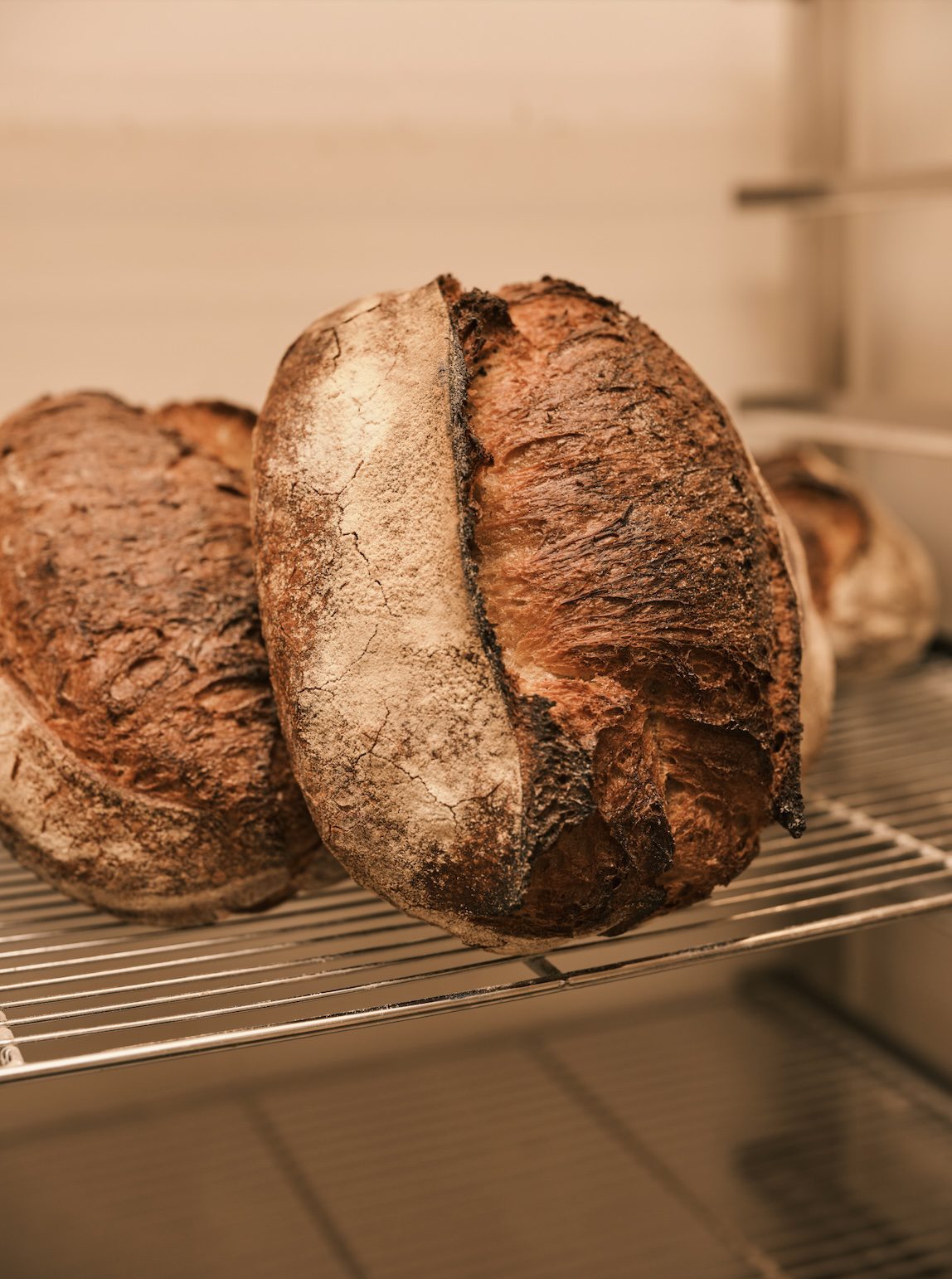
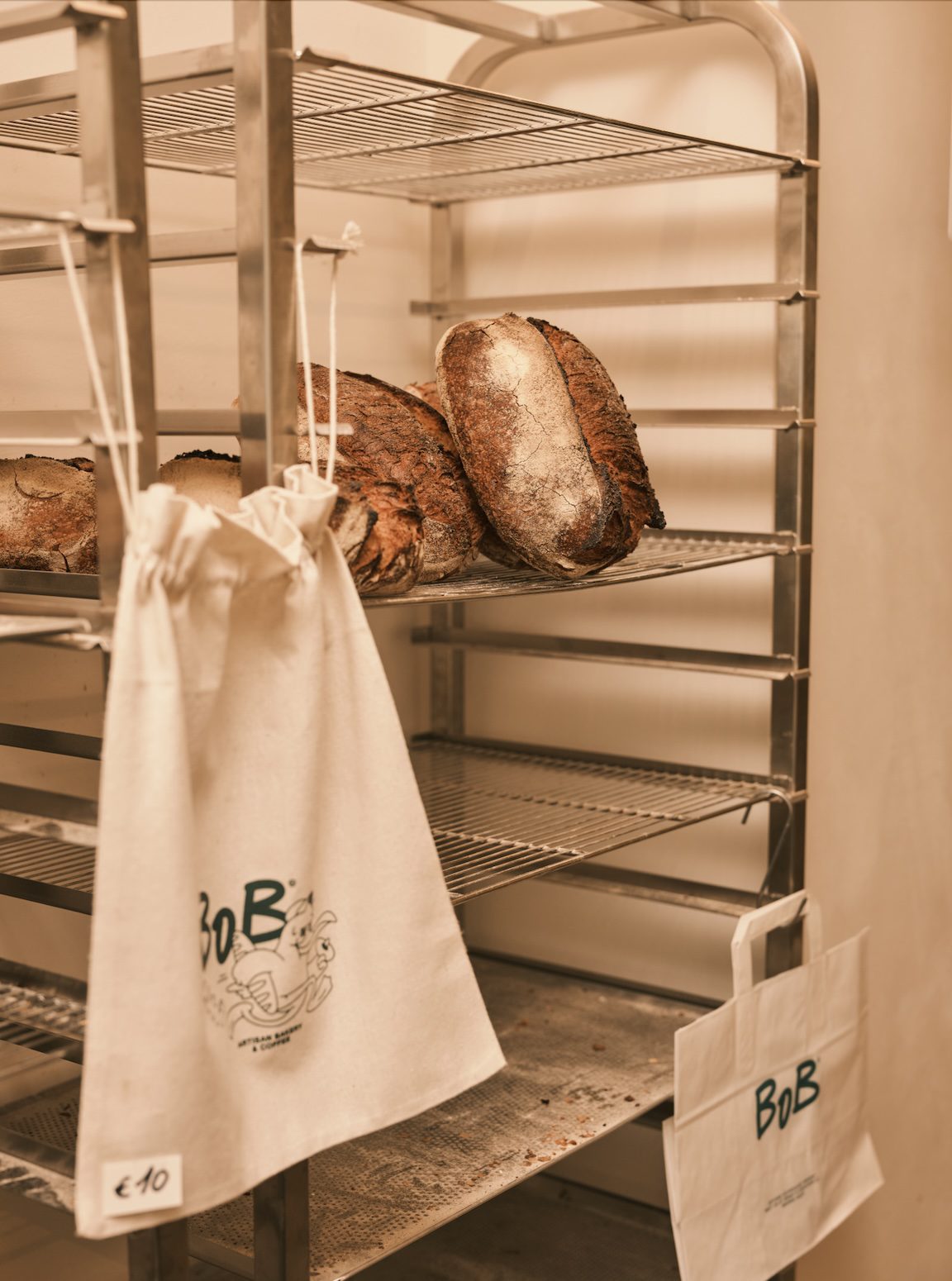

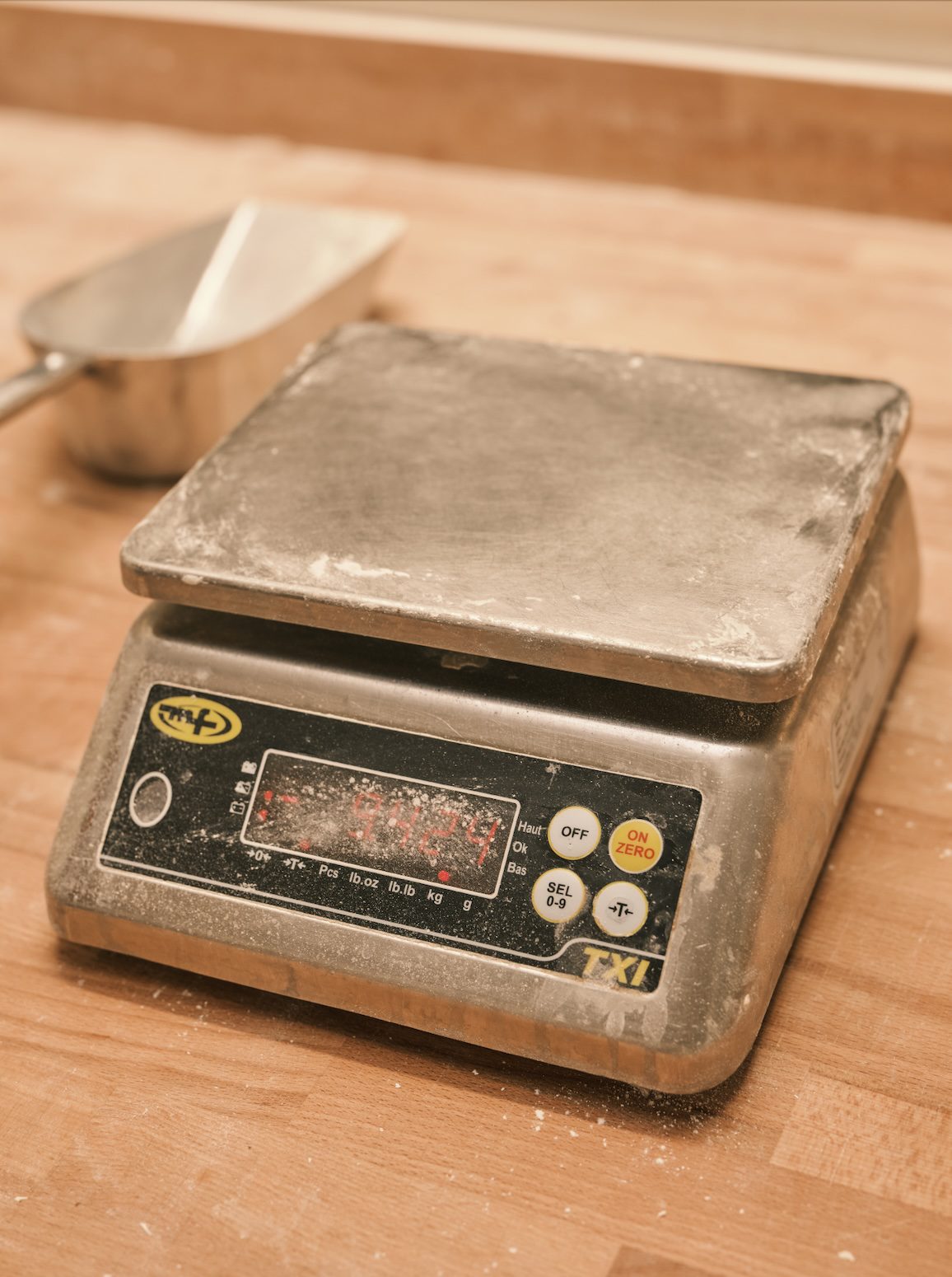
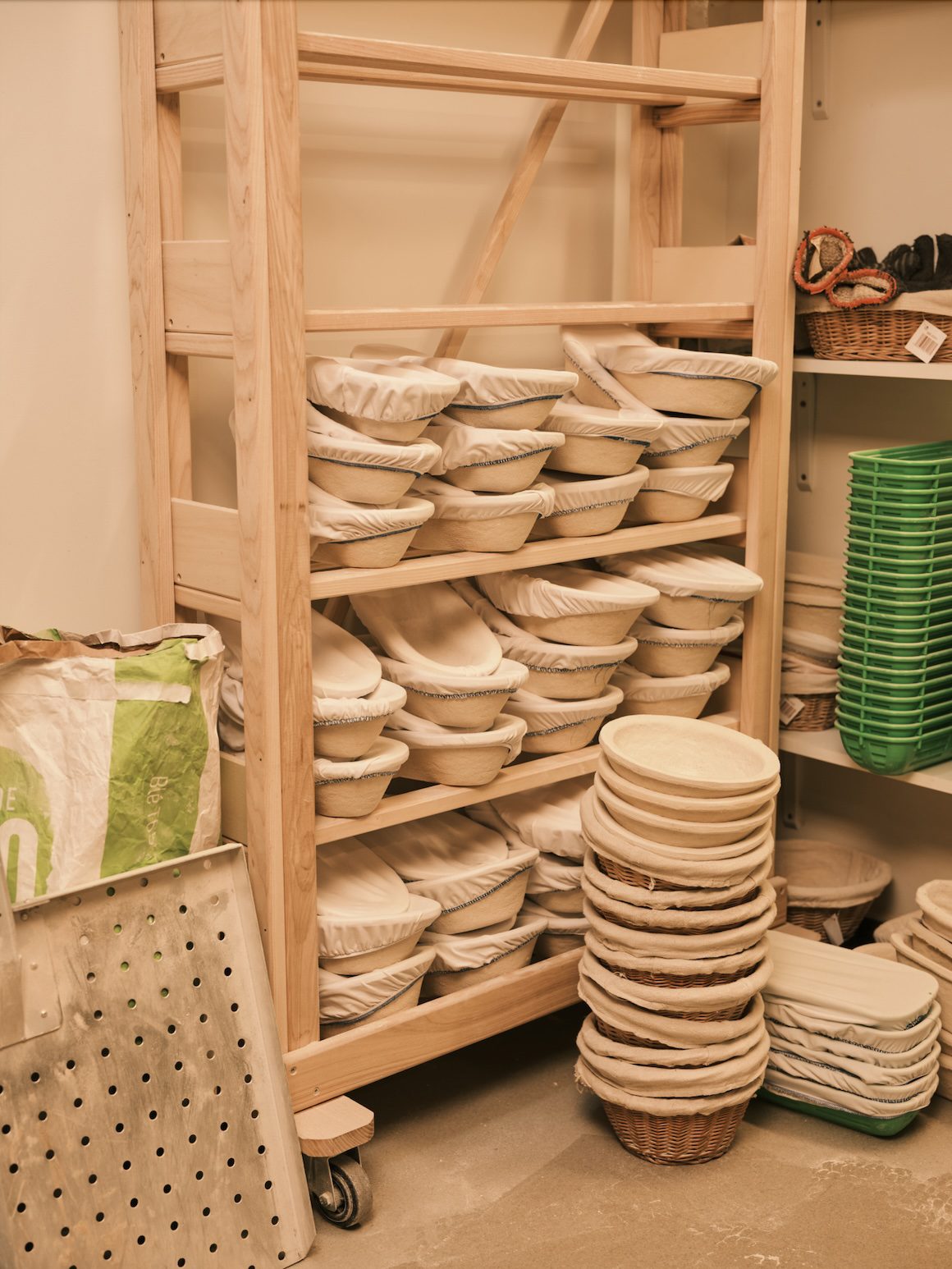
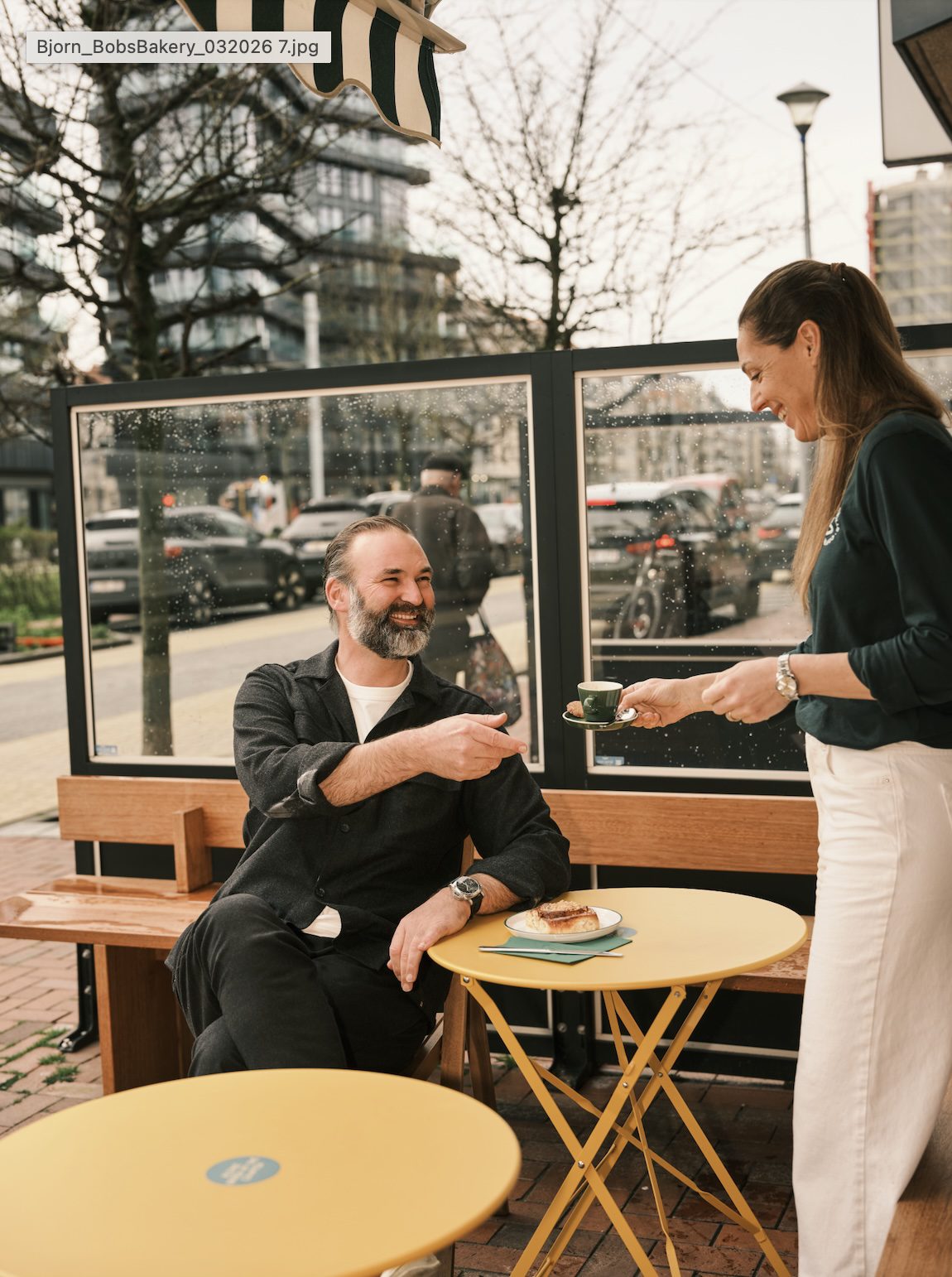
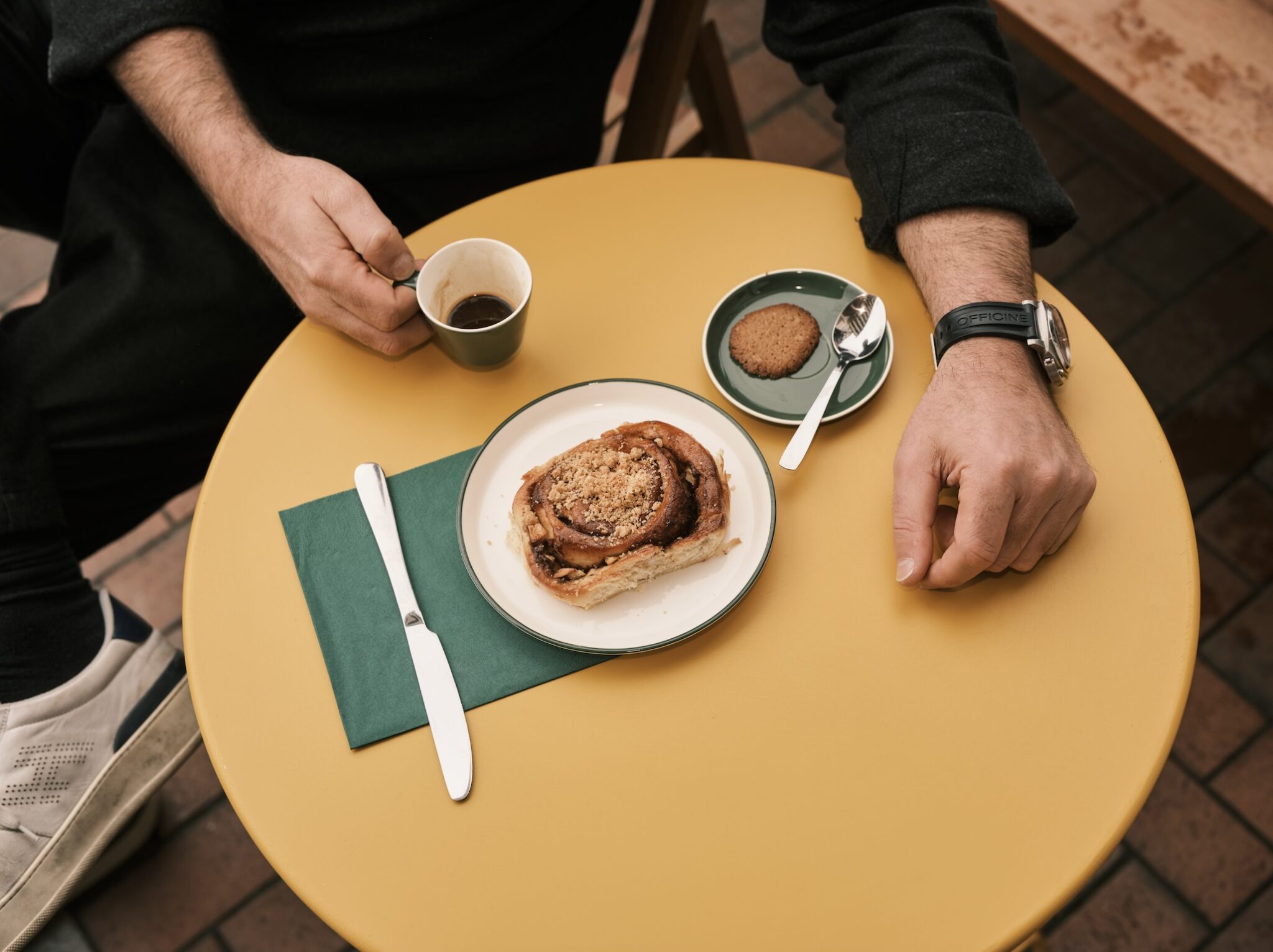
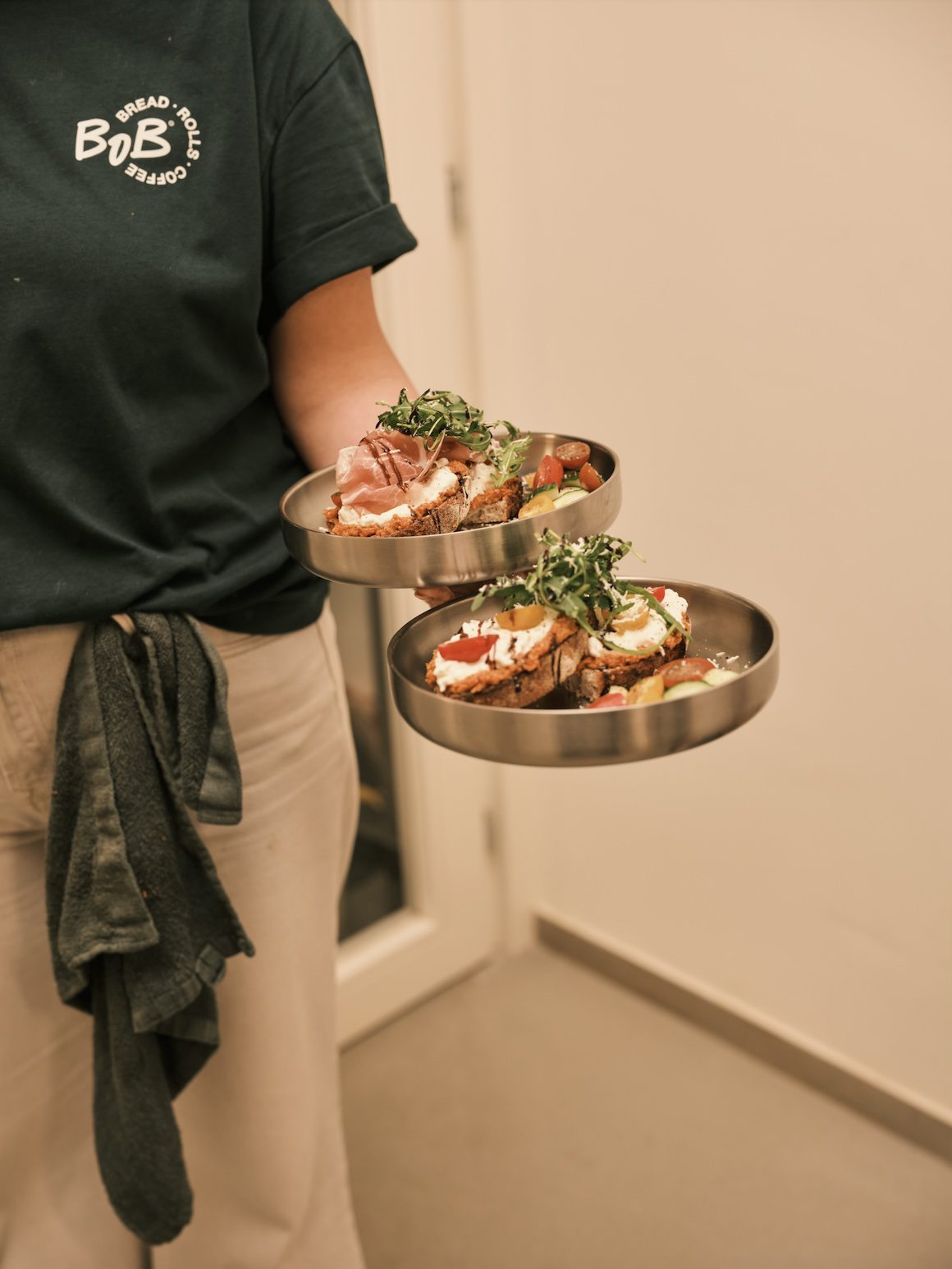
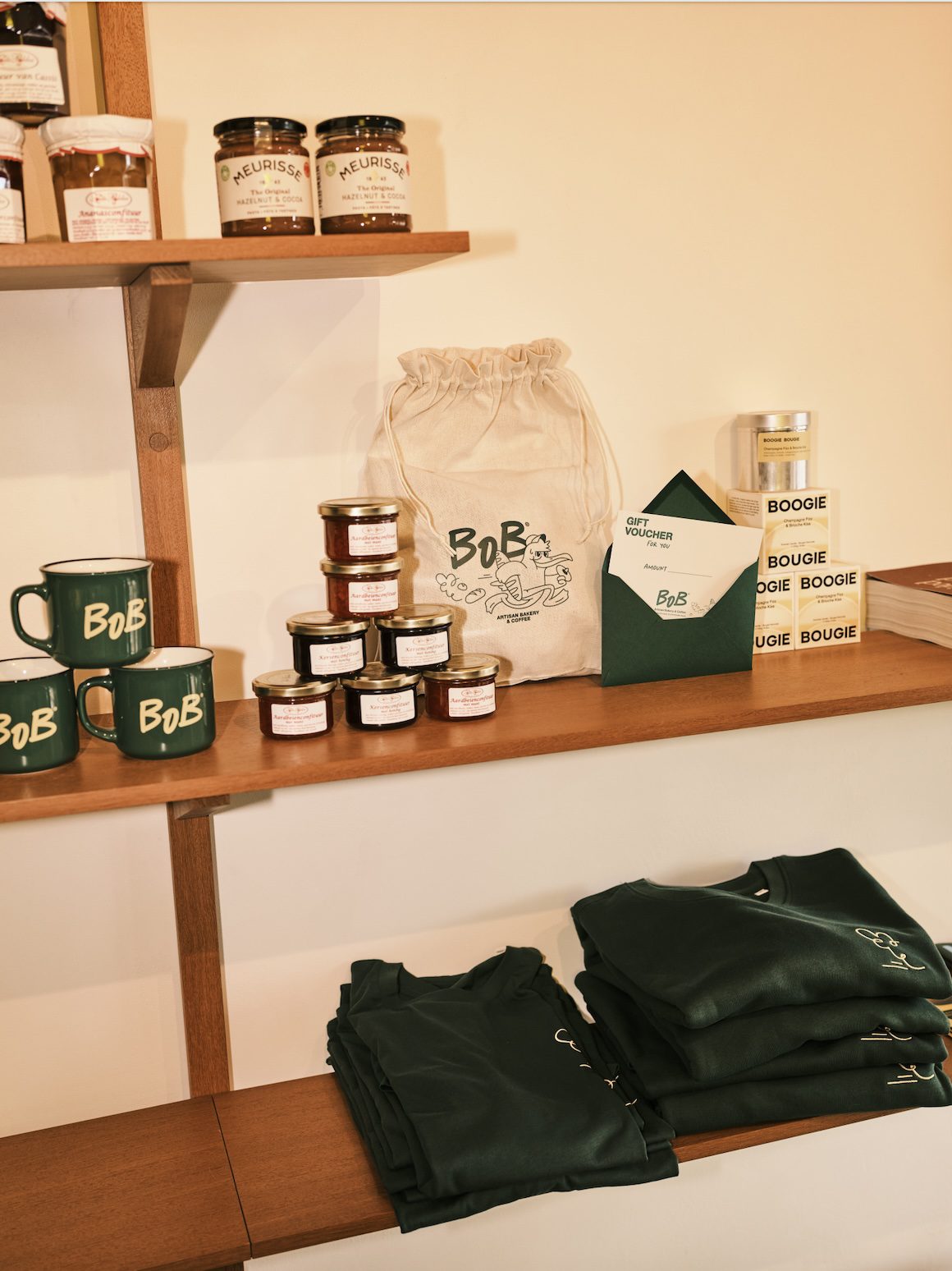
“Something is happening here,” Yannick notes. “I really believe there’s potential to make this a seaside Brooklyn.”After building a reputation as Antwerp's ‘sourdough bros,’ Ann and Yannick moved to Knokke-Heist last summer. “Back to the roots. And a choice for balance and quality of life, yes.” Besides the—by now ‘world-famous in Knokke-Heist’—sourdough toast and a drool-worthy selection of cinnamon rolls, a small but fine range of delicacies stands out: Zoete Polder jams (try the cherry with honey), crunchy chili and almond olive oil by Umma, and Maxmax’ premium spicy olive oil with Jolokia pepper.
@bob.artisanbakery
@saltprojects.be
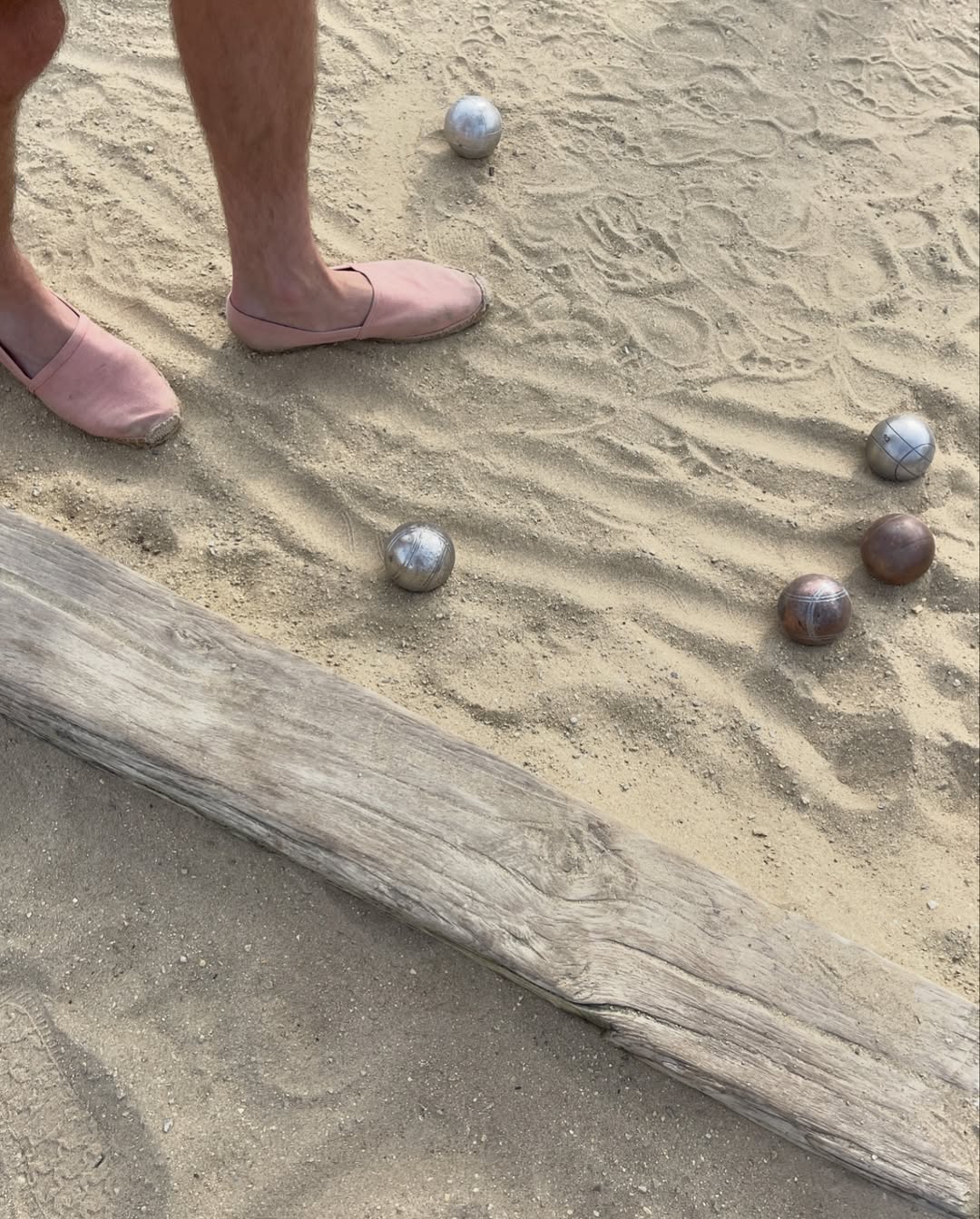
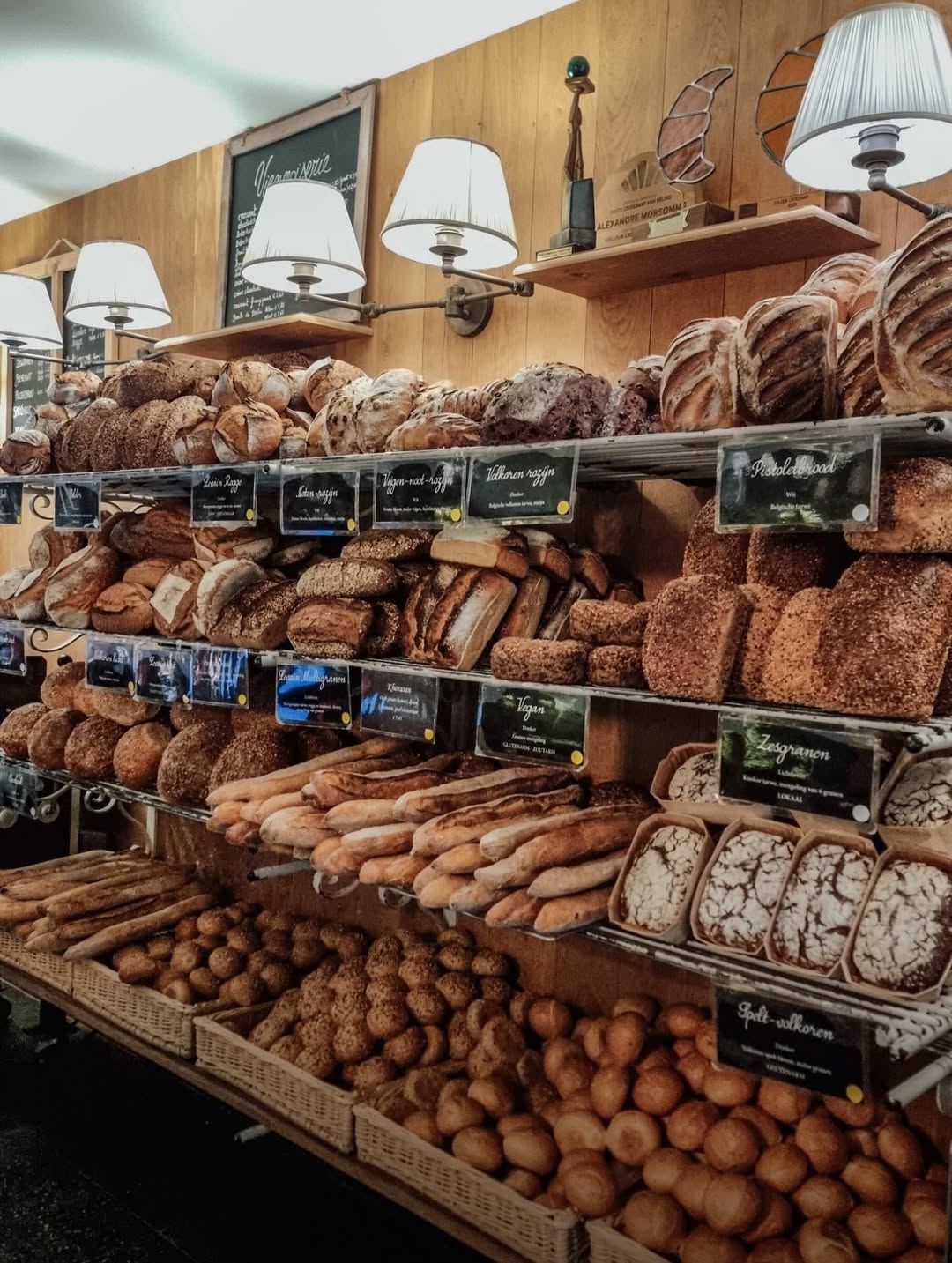
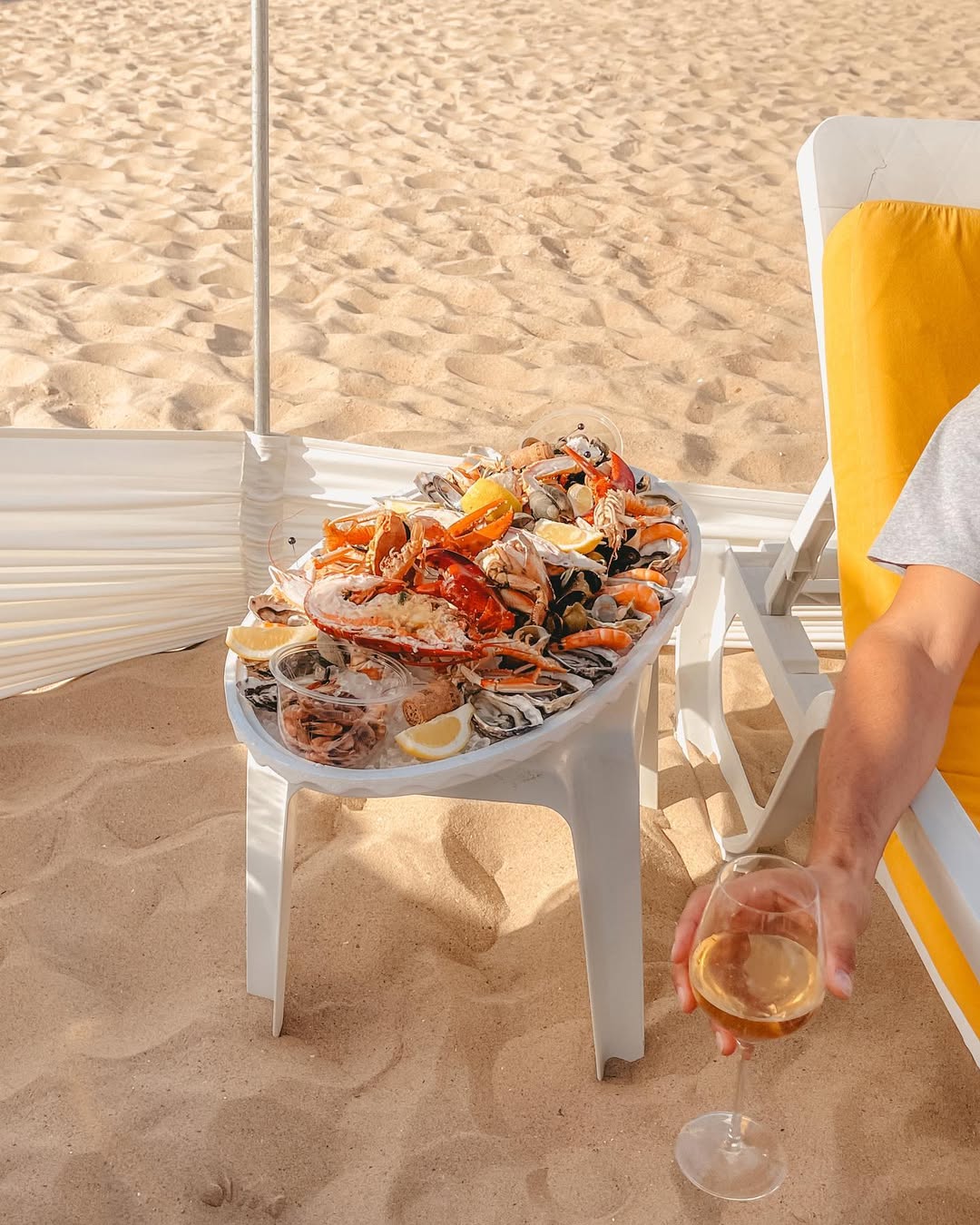
18 Insider Picks in Knokke-Heist goes live 3th week of April.(with MORE bakeries!)
"The relationship with a place and a building starts with architectural quality, but the programming is just as vital,” he notes. “That is a crucial part of our job. How the plinth—the ground-floor layer of the building—is filled determines the image of this square and Graaf d'Ursellaan for decades to come. "Developer Bjorn Christiaens's full interview in the print edition.
Andrew Tuck, editor-in-chief of Monocle—a magazine that pioneered the ranking of ‘livable cities’—has his own eccentric barometer: the Poodle Metric. “To know if a neighborhood is safe and pleasant to live in, you only need to count the small dogs,” he says.“The Poodle Metric is an indicator of property prices. High-scoring zones tend to be occupied by people with large amounts of disposable income and are home to numerous pocket parks and well-kept green spaces. If I were a property investor, I would rely on the Poodle Metric.”
THE RISE OF OAT MILK, MATCHA, AND ESPRESSO-TONIC CULTURE HAS MOVED COFFEE INTO A REALM OF TASTE AS IDENTITY—AND A LEAD INDICATOR FOR YIELD. THIS SHIFT IS BEST OBSERVED THROUGH THE ALO YOGA- AND ARC’TERYX-CLAD CROWD, BALANCED ON ON RUNNING CLOUDMONSTERS. IT IS A LIFE AS GEOLOCATED AND OPTIMIZED AS THE ACIDITY OF THEIR ANAEROBIC FERMENTED POUR-OVER.
"FUNK is my go-to for plant based cinnamon roles and matcha," says content creator and Interior Architect Mariam Tsilosani.
→@bakkerijfunk
A conversation with SEVEN (and Eight) founders, Kenya and Sasha on the sweetspot between healthy and delicious.
+ their favourites for drinks, dinner and coffee in Brussels.
→ @seven.brussels
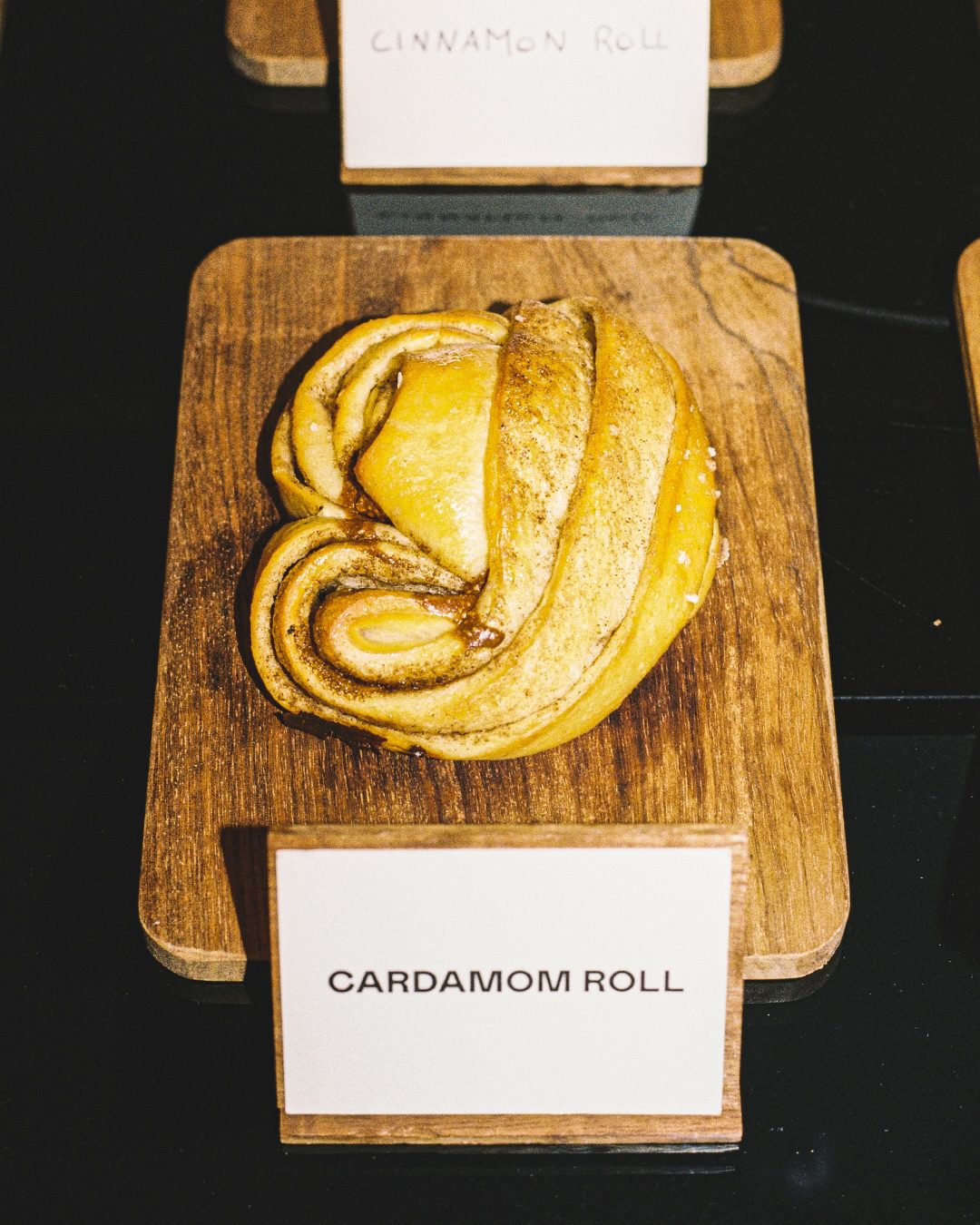
With an in-house bakery and top-tier coffee, STELLA in Saint-Gilles is that metropolitan coffee bar where coffee culture and pastry meet.
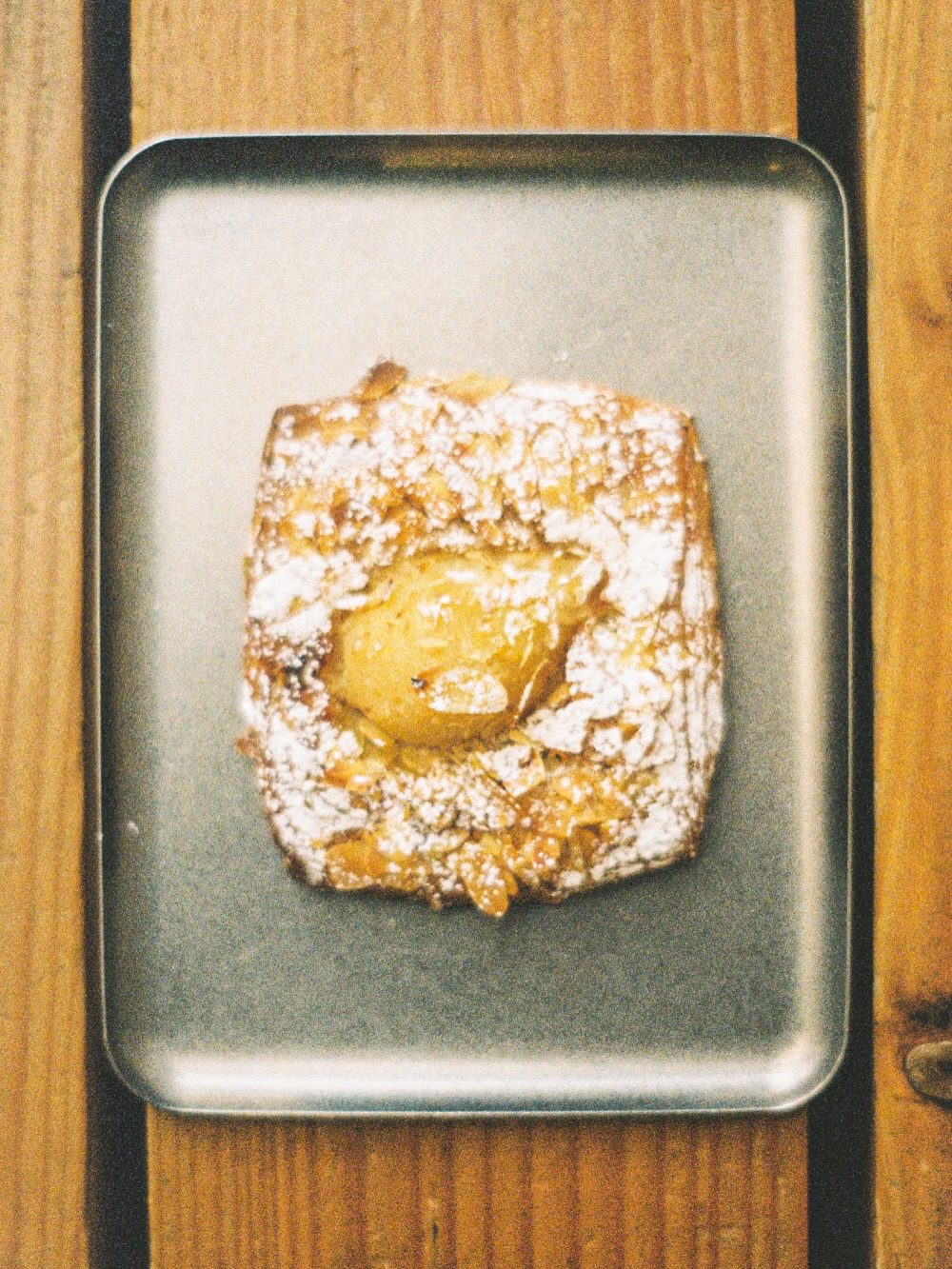
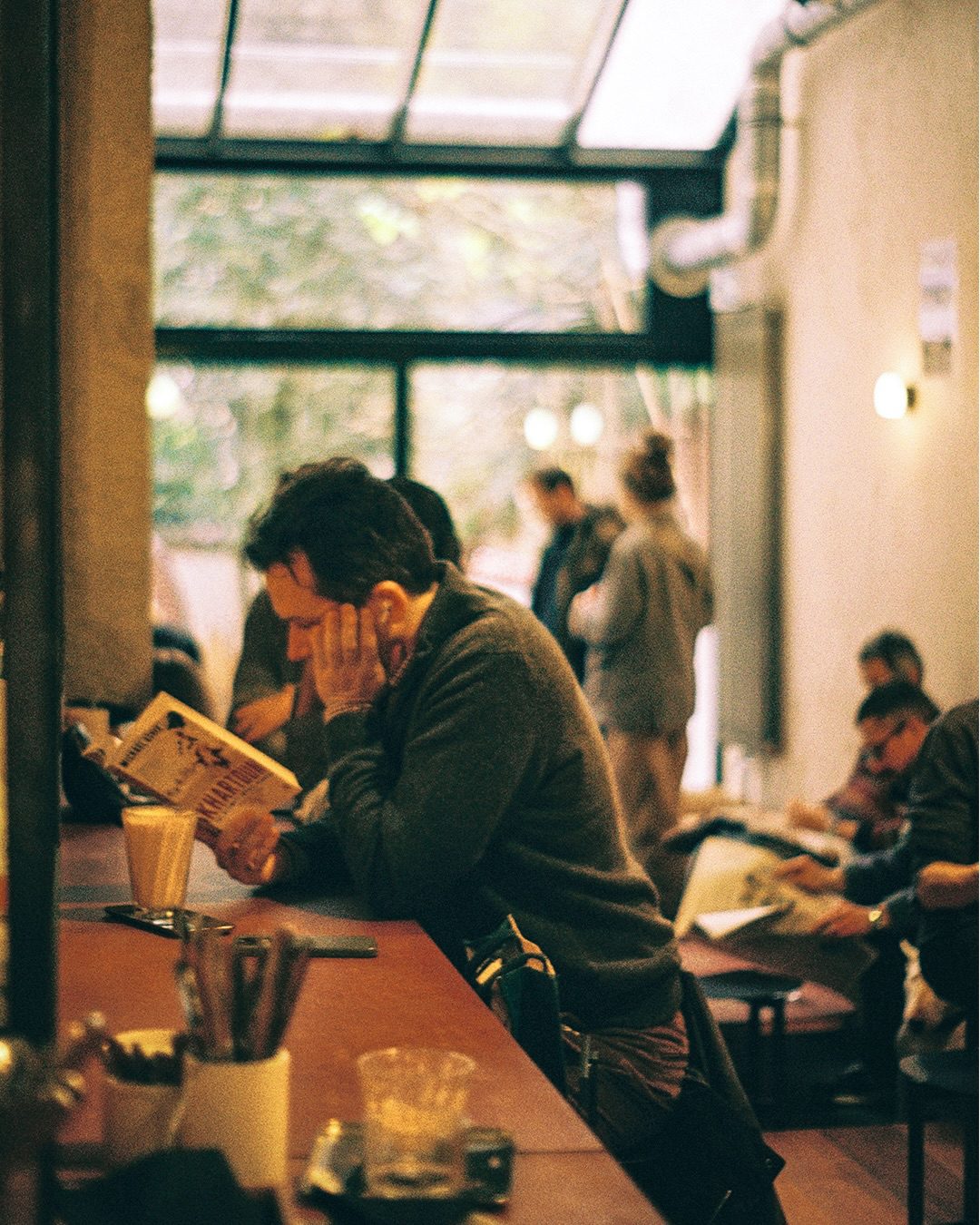

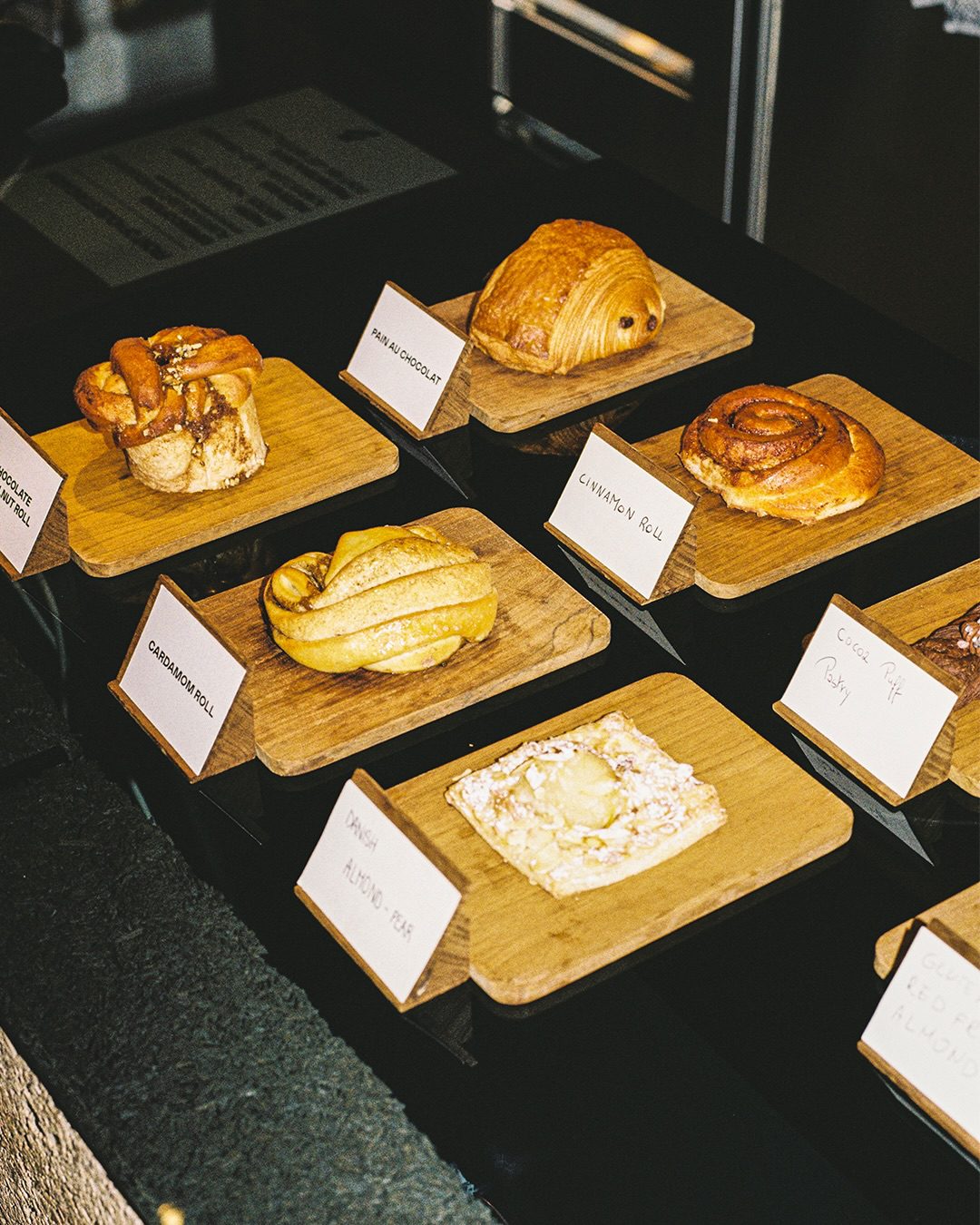
A pear-almond danish and a signature rosewater latte (roots in Syrian culture — used for centuries in sweets and drinks) on the terrace delivering that multicultural urban vibe hit.
Whether it’s the froth on a matcha or the grooming of a poodle, status is now derived from geospatial exclusivity. The perfect pastrami sandwich—make sure to snap our online special on the essential spots to devour the sandwich renaissance—almond croissant, archival Margiela Tabis, and Japanese vinyl act as beacons for high-net-worth 'culturalists' who prioritize curation over accessibility. This is the hardware of an aesthetic regime ensuring you only encounter people who share your specific cultural frequency.“We no longer choose a neighborhood; we opt into a physical feed,” notes Kyle Chayka in The New Yorker.
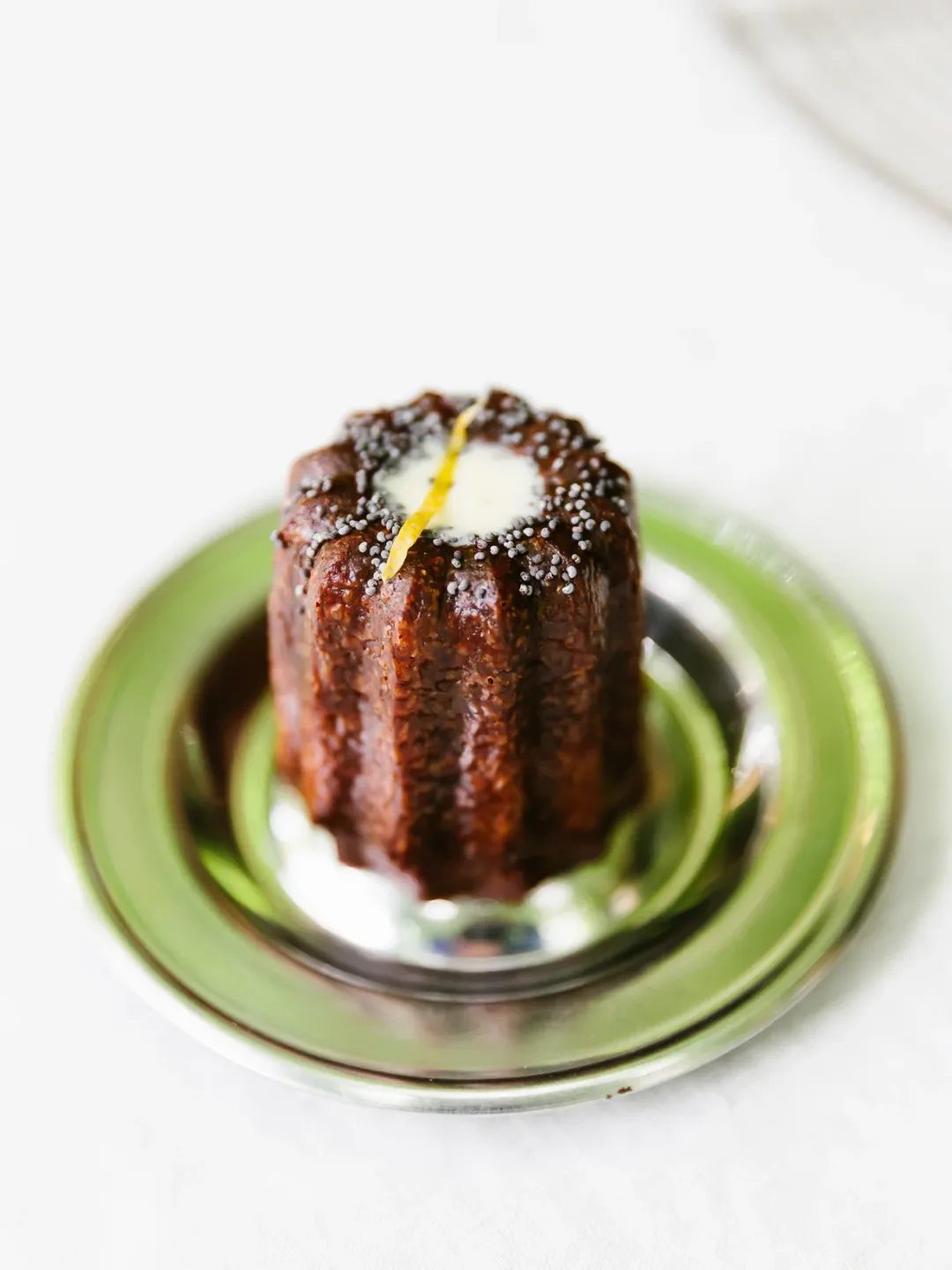
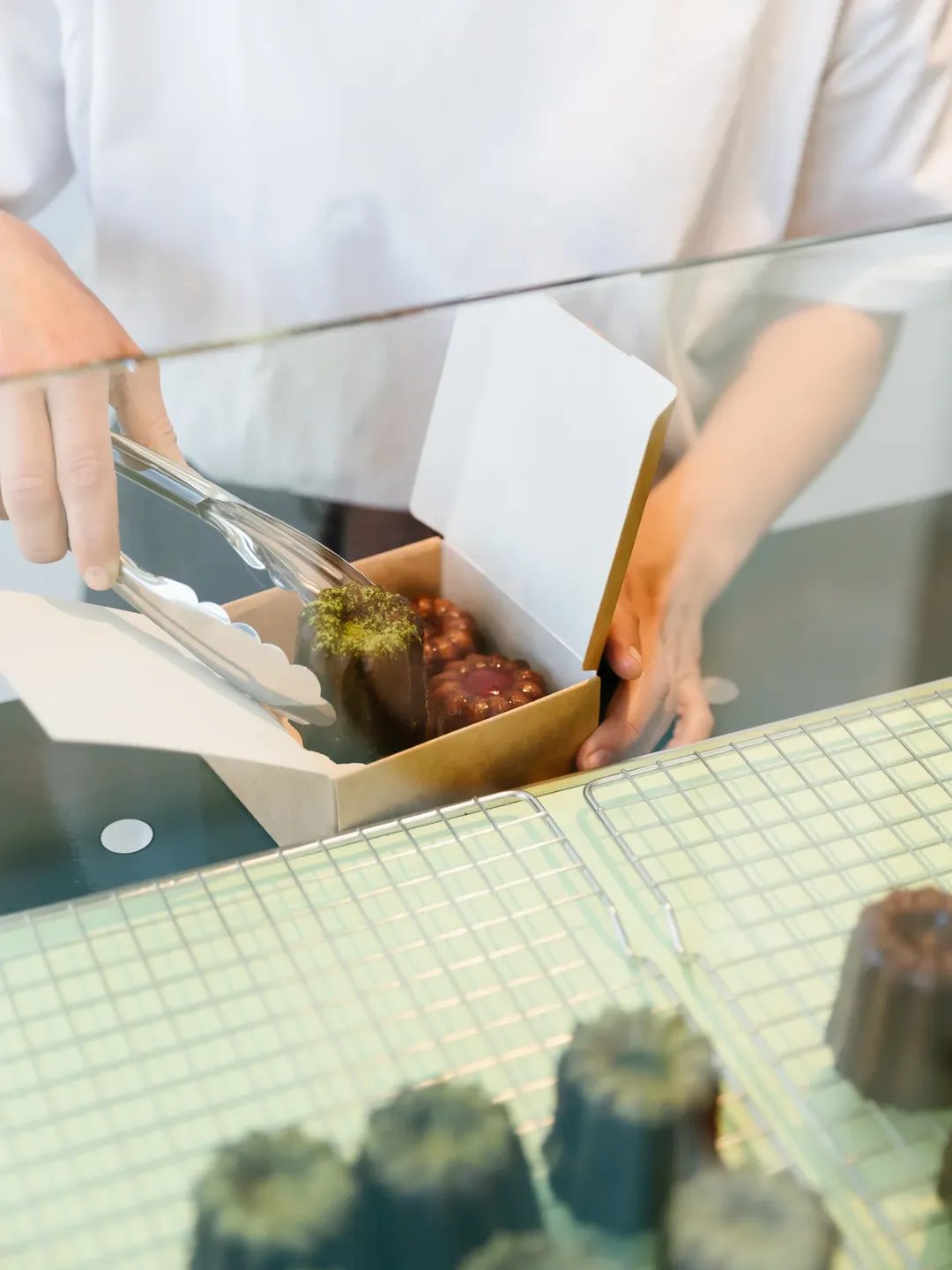
Apart from a boutique-like collection of canelés - TRY THE LEMON CANELé! - transforming a coffee break into a Parisian vibe, the interior design by groundbreaking ONO architecture studio, makes Cafe Canelé a must-visit for the foodie with an eye for architecture.
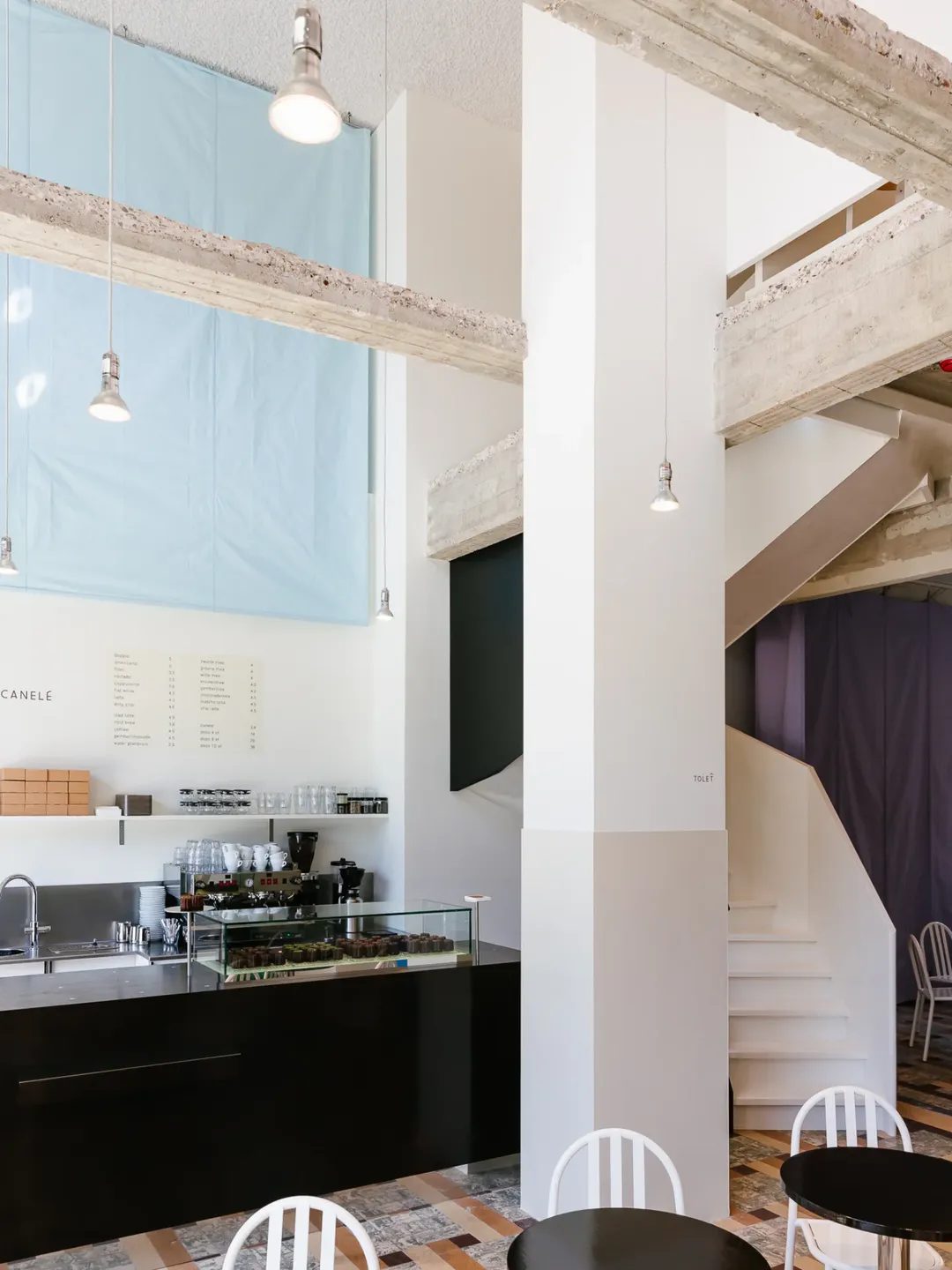
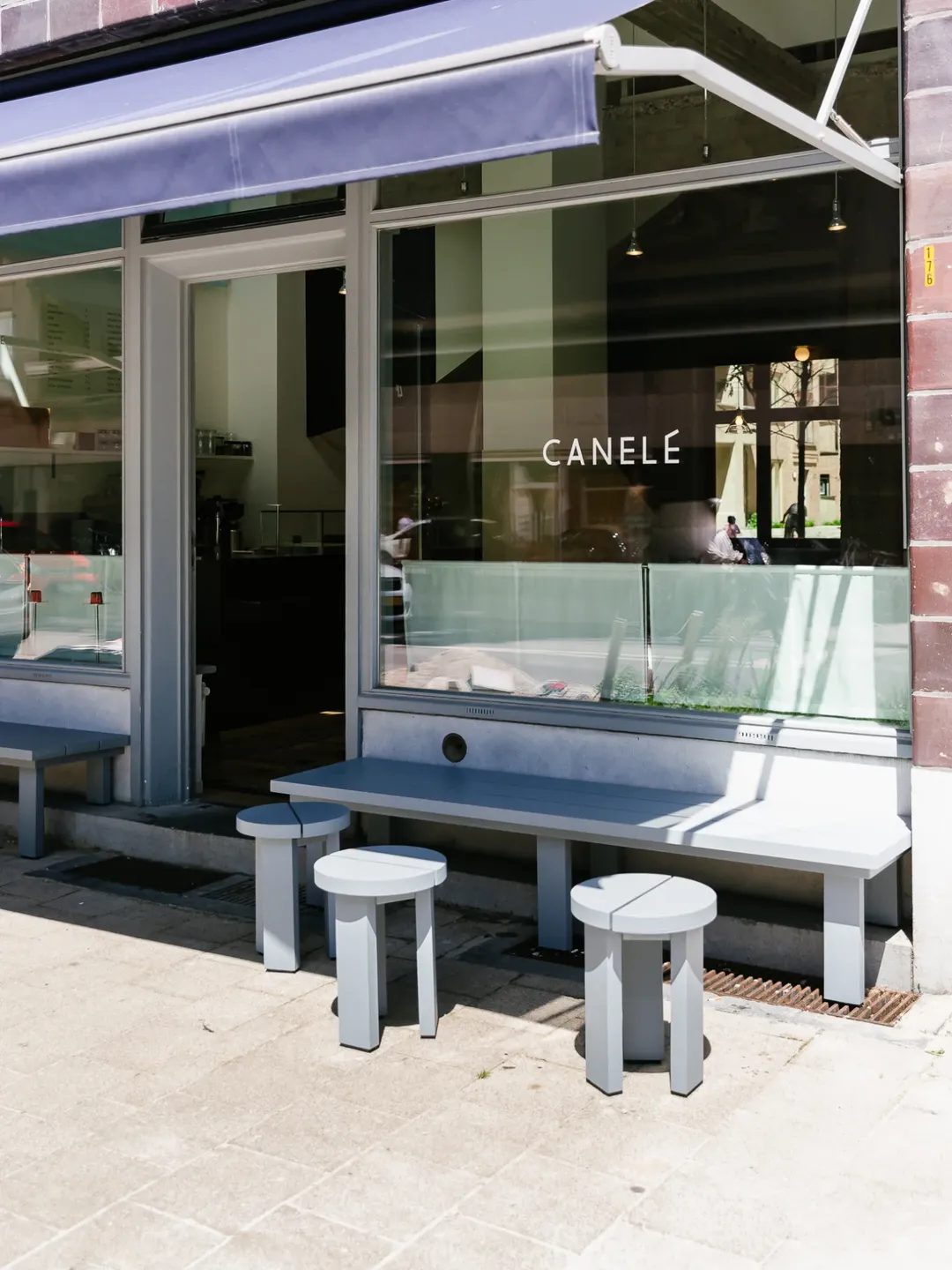
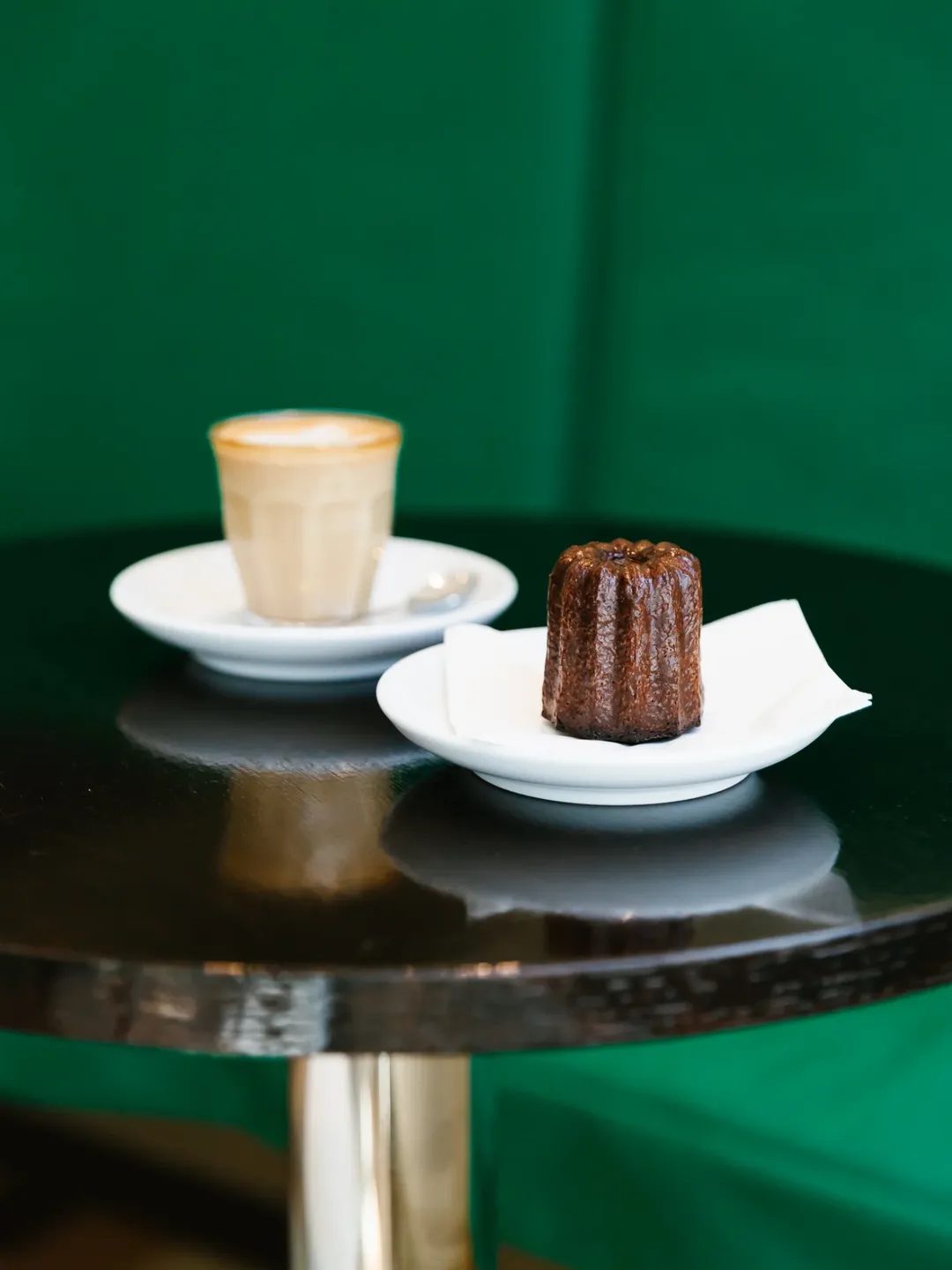
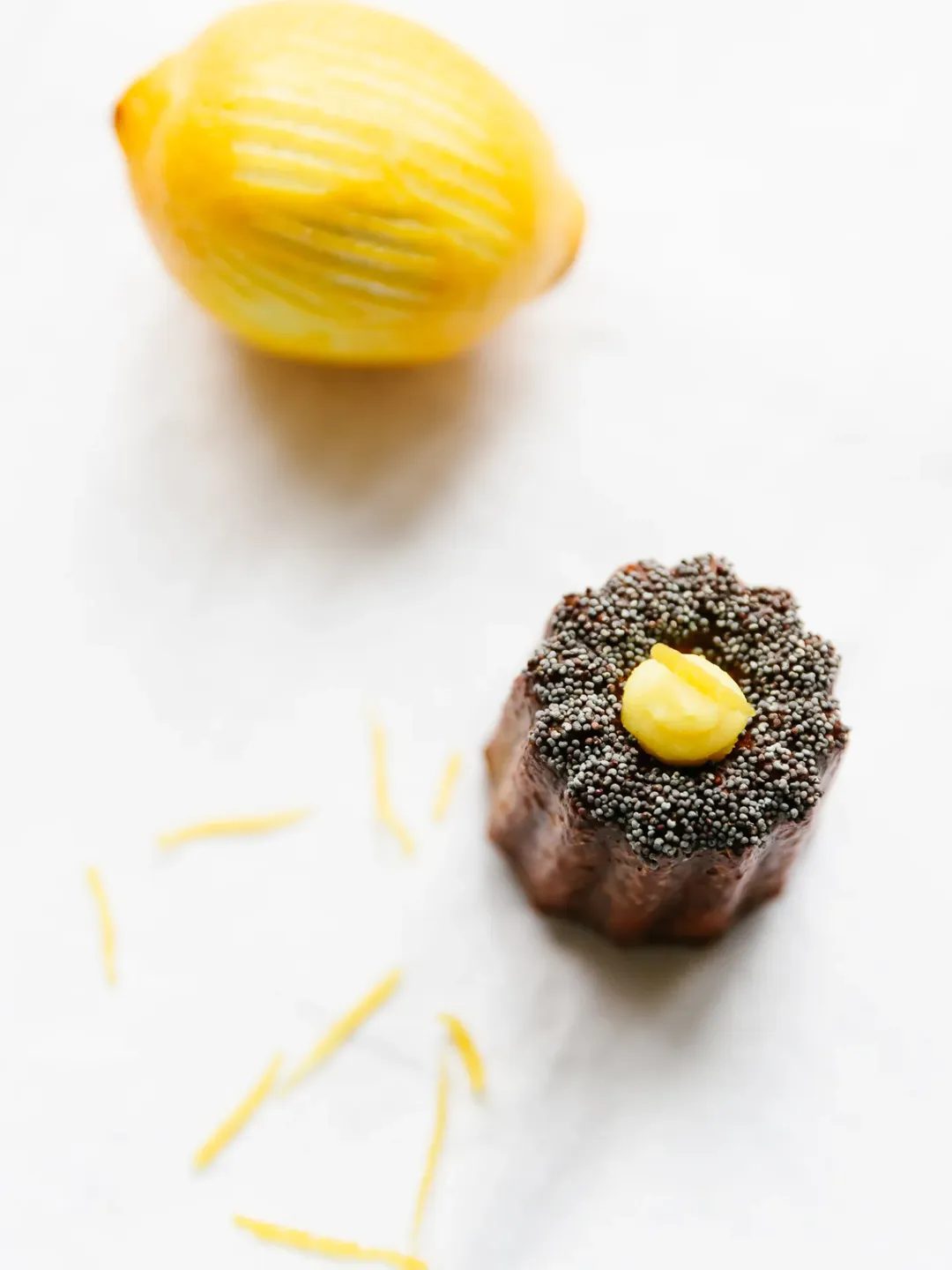
"The design builds on what is available, picking up the existing architectural narrative of the revitalized Fierensblokken," says Sara Verleye, one of the ONO architects on the project. "It breaks with the material-heavy temporality of retail interiors that stand detached from their buildings. The meticulous re-piecing of the original floor perfectly illustrates that idea of reuse." Insider tip: ask (politely) to look behind the counter to see how creatively that floor was puzzled together.
@cafecanele.antwerp
Coffee lovers likely know the most photogenic feature of one of ONO architecture studio's other coffee temples in Antwerp: the massive concrete pillars on the terrace of Caffènation Blue. The M127 building proves how a design can revitalize a neighborhood. What was once an indistinct, hermetically sealed office building is now a smart neighborhood hub combining a co-working spot, law firm, community garden, and concert hall. A rethinking of reuse—stripped to the carcass before adding new layers for shared functions—of public space, and of the architect’s role. The collaboration between ONO architecture, artist Philip Aguirre y Otegui, landscape architect Ludovic Devriendt, and London-based Universal Design Studio illustrates an interdisciplinary way of working, moving away from the architect as the sole protagonist.“The building is a snapshot, as far as we’re concerned. It’s not final; its flexibility allows it to easily morph into something entirely different in the future. This creates a hybrid aesthetic that emerges with building reuse. Two wide-cut voids connect the lunchroom and library with the now spatially opened ground floor.”
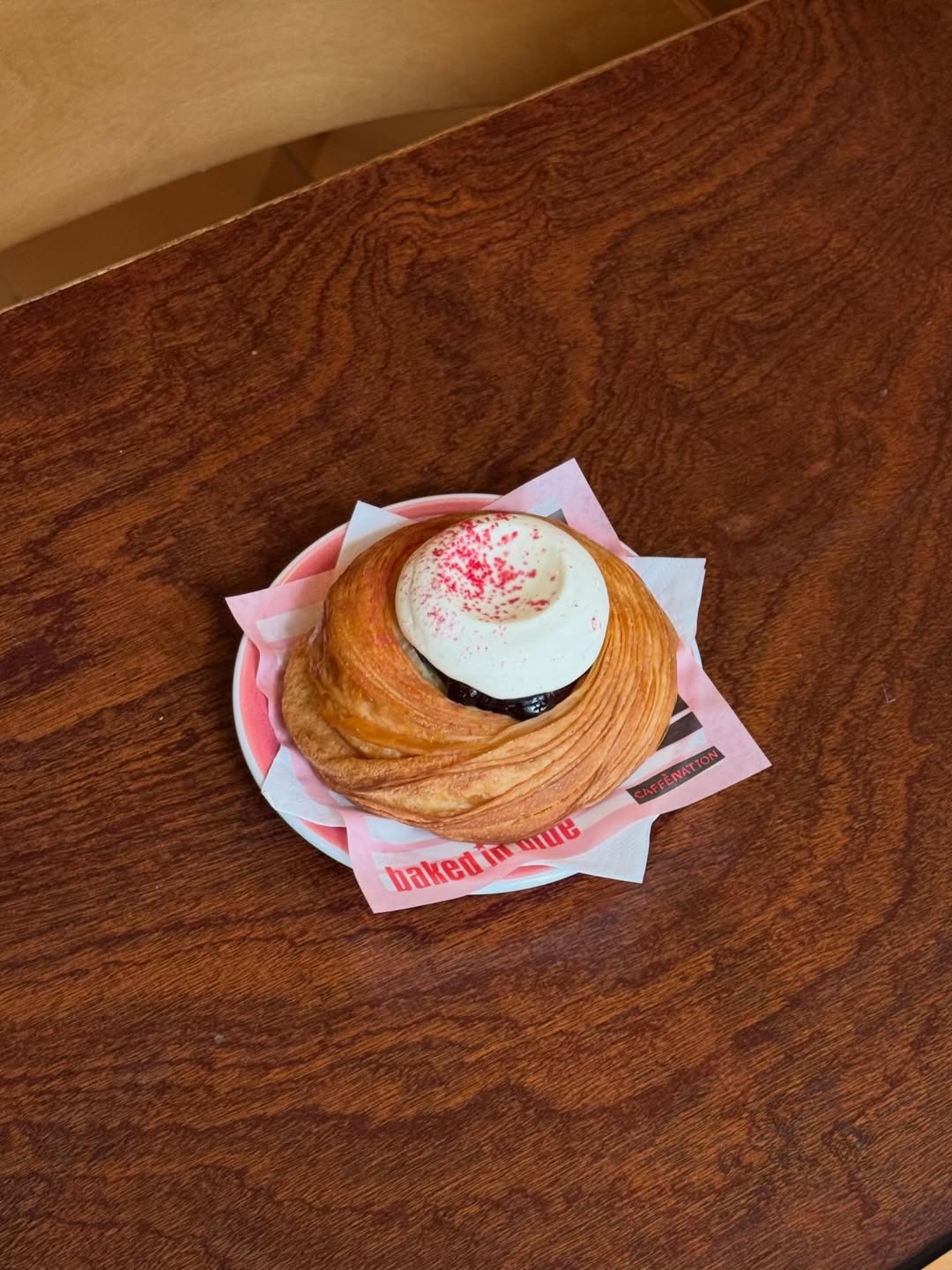
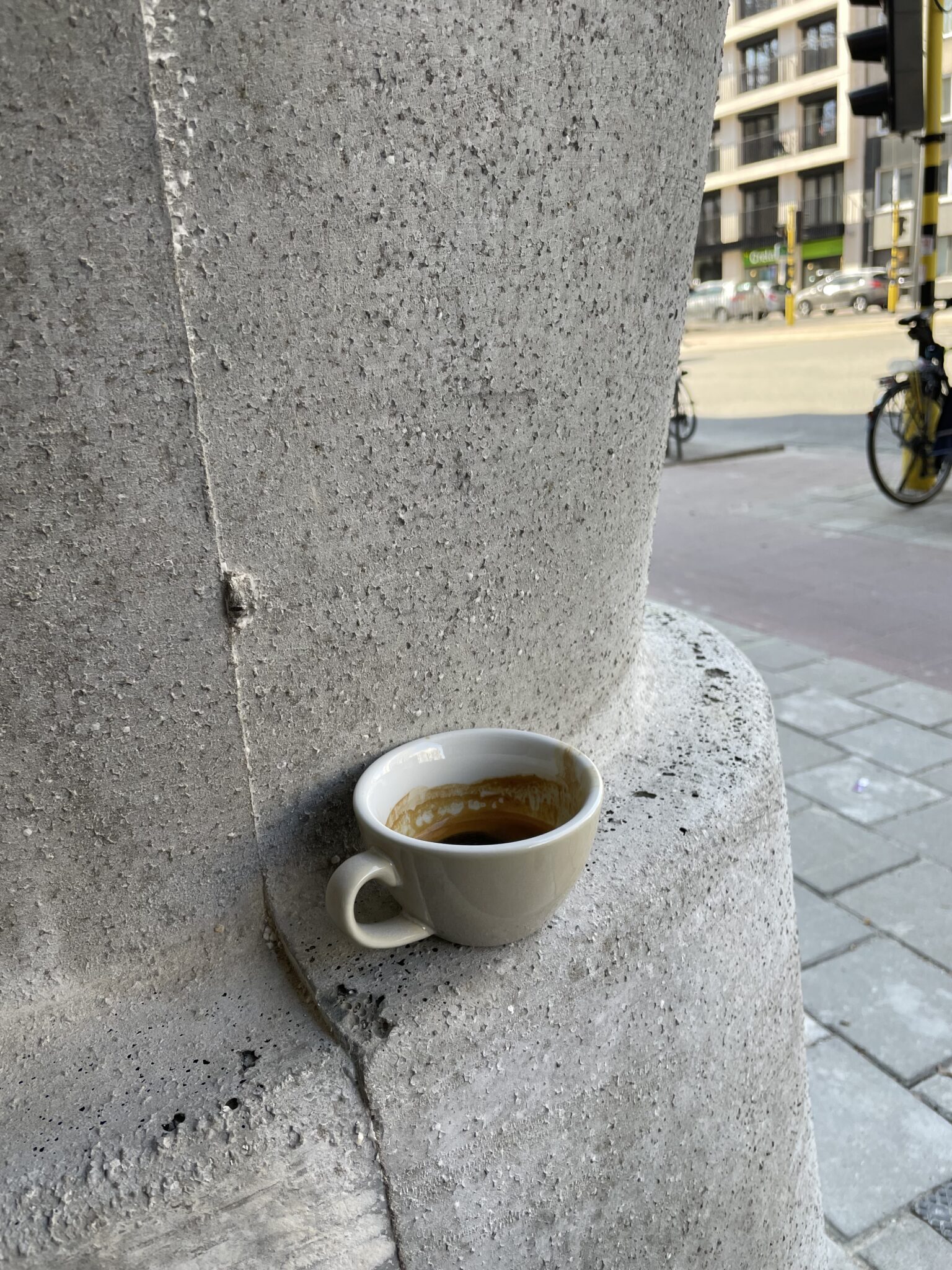
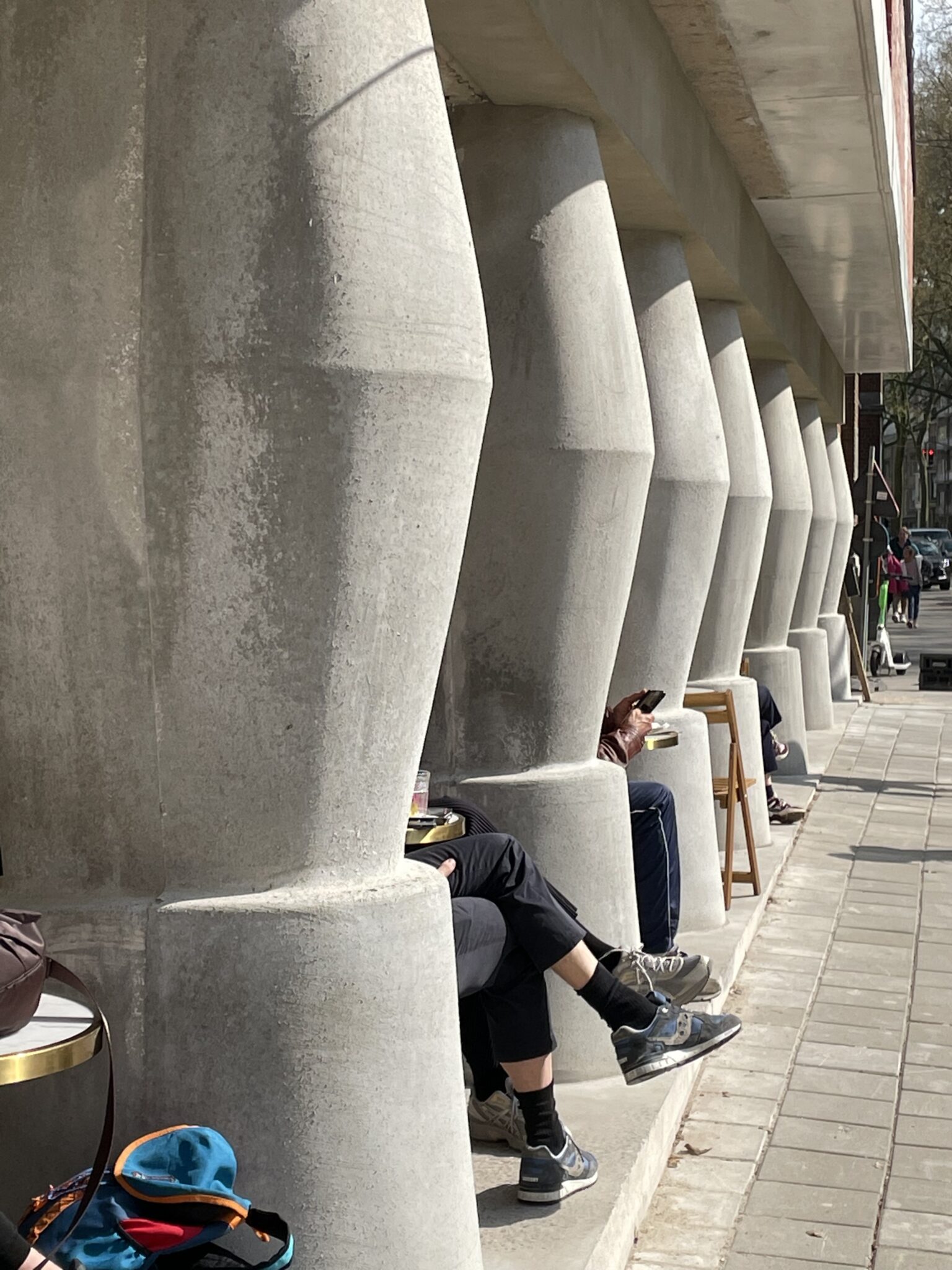
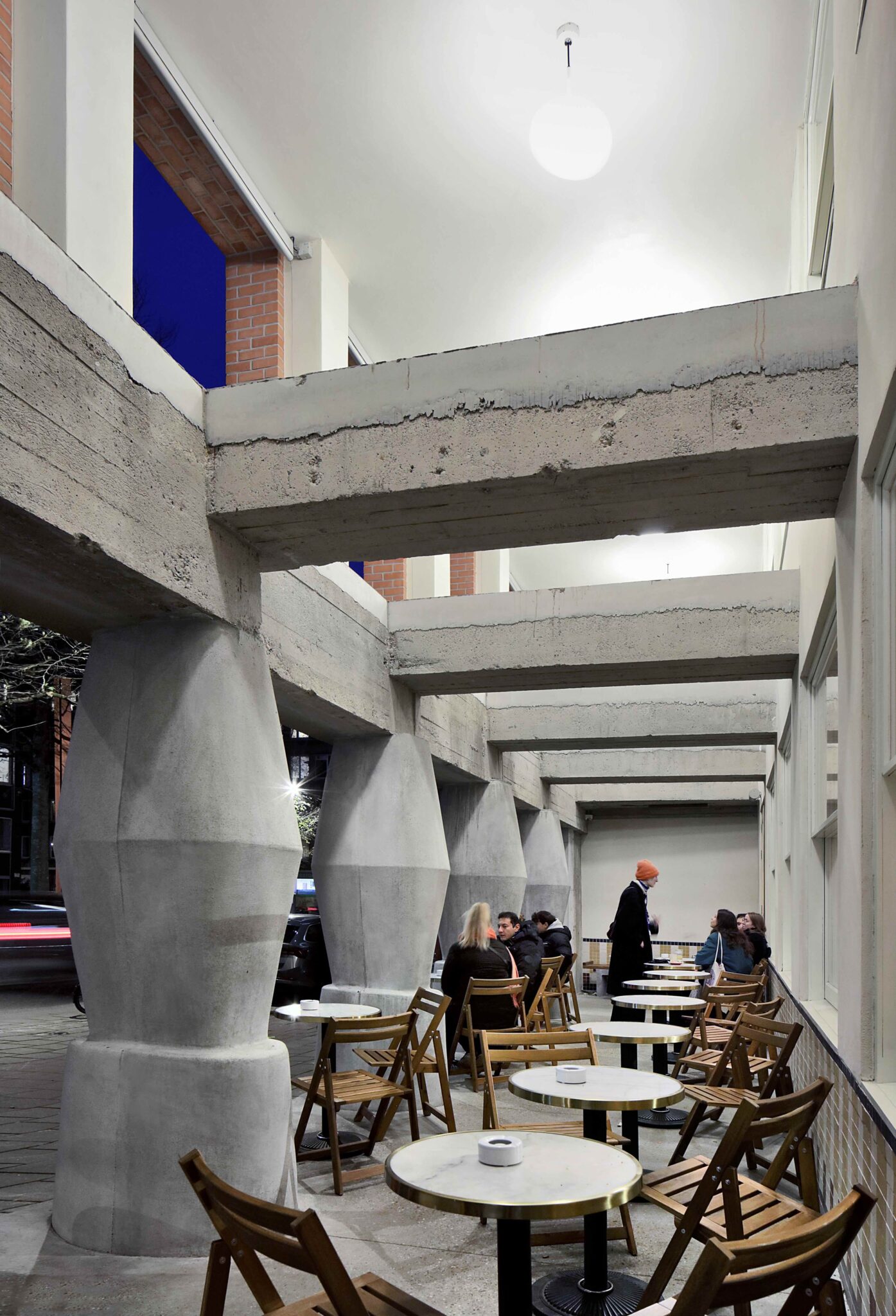
The much-discussed cylindrical columns on the terrace originated from technical necessity, with an artistic layer added afterward. “That’s Philip Aguirre’s vision too,” says Sara. “He only wanted to intervene where necessary—in this case, a new concrete casing that had to surround the original pillars anyway because they lacked sufficient cover for exposure to the elements. An extra sculptural layer embedded in the art integration as a necessity.”It started with small sculptures, evolving into the concrete statement that now opens the building to the neighborhood at the street side. “And which also partially shields you on the terrace from that busy thoroughfare,” Gert adds. “The thickness of the columns creates a very sheltered feeling. An idea inspired by the historical loggia, like the porticos in Bologna.” Architecture (and coffee) enthusiasts know where to go.
CAFFENATION BLUE - Mechelsesteenweg 127, 2018 Antwerpen
@caffenation_coffee
Crucial to the neighbourhood ecosystem are the Local Heroes—those headstrong, independent entrepreneurs who give a city its taste and edge. Their craftsmanship, curated offerings, and human scale offer an emotional relevance that far outlasts the cold efficiency of online discounters. They are the reason to "justify the trip."
“I love the Marolles. People are kind, not in a rush, and welcoming. During the week, time almost feels stuck, as if we’re not really part of the city. There’s a wide mix of people, from different cultures and social backgrounds, and yet it feels like everything coexists quite well. On weekends, it’s a different story: the streets are crowded, the terraces are full. It becomes a very lively area—Brussels residents from all over the city hunting for that one vintage piece they don’t yet own, and tourists wandering around.”
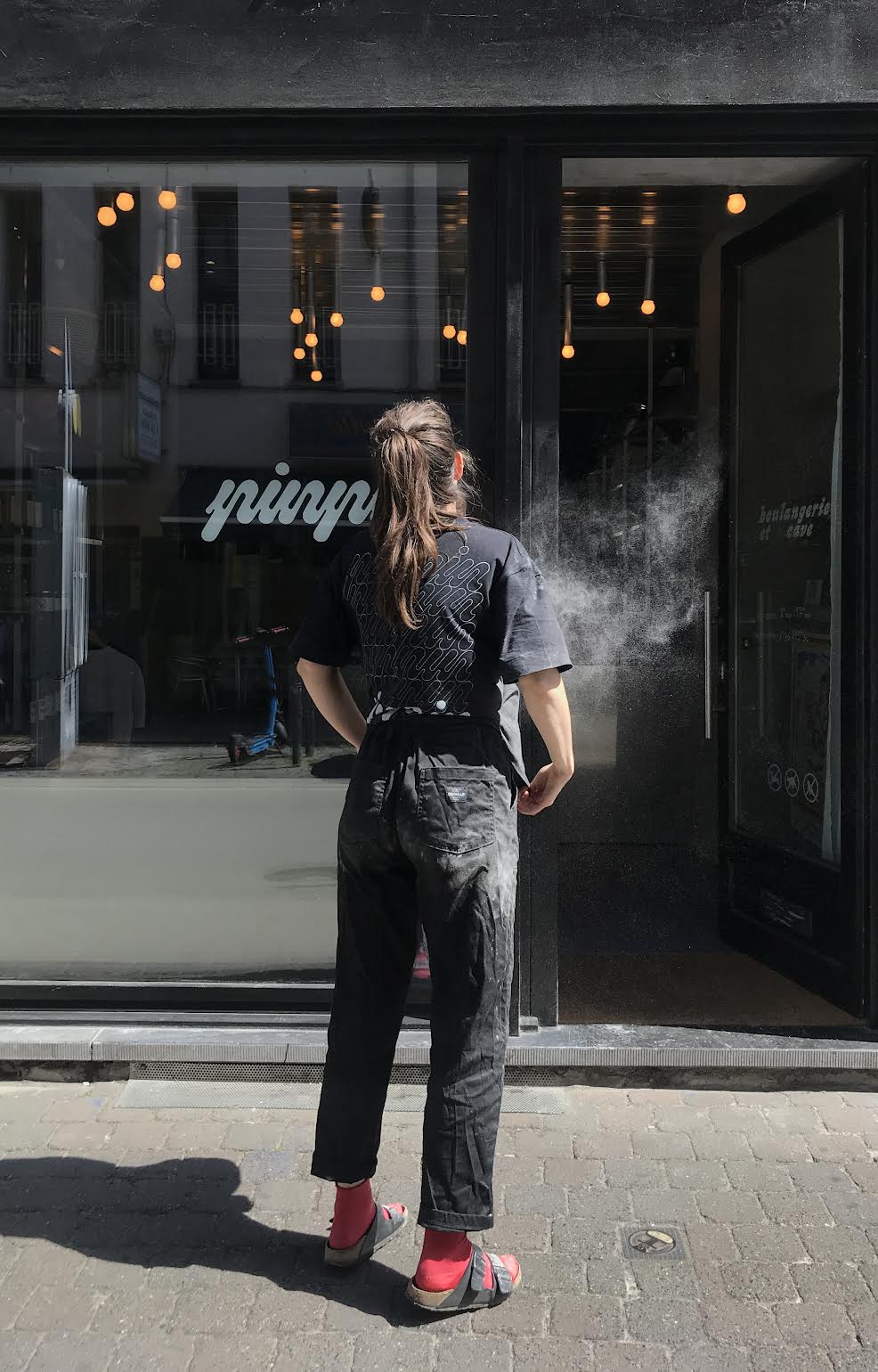
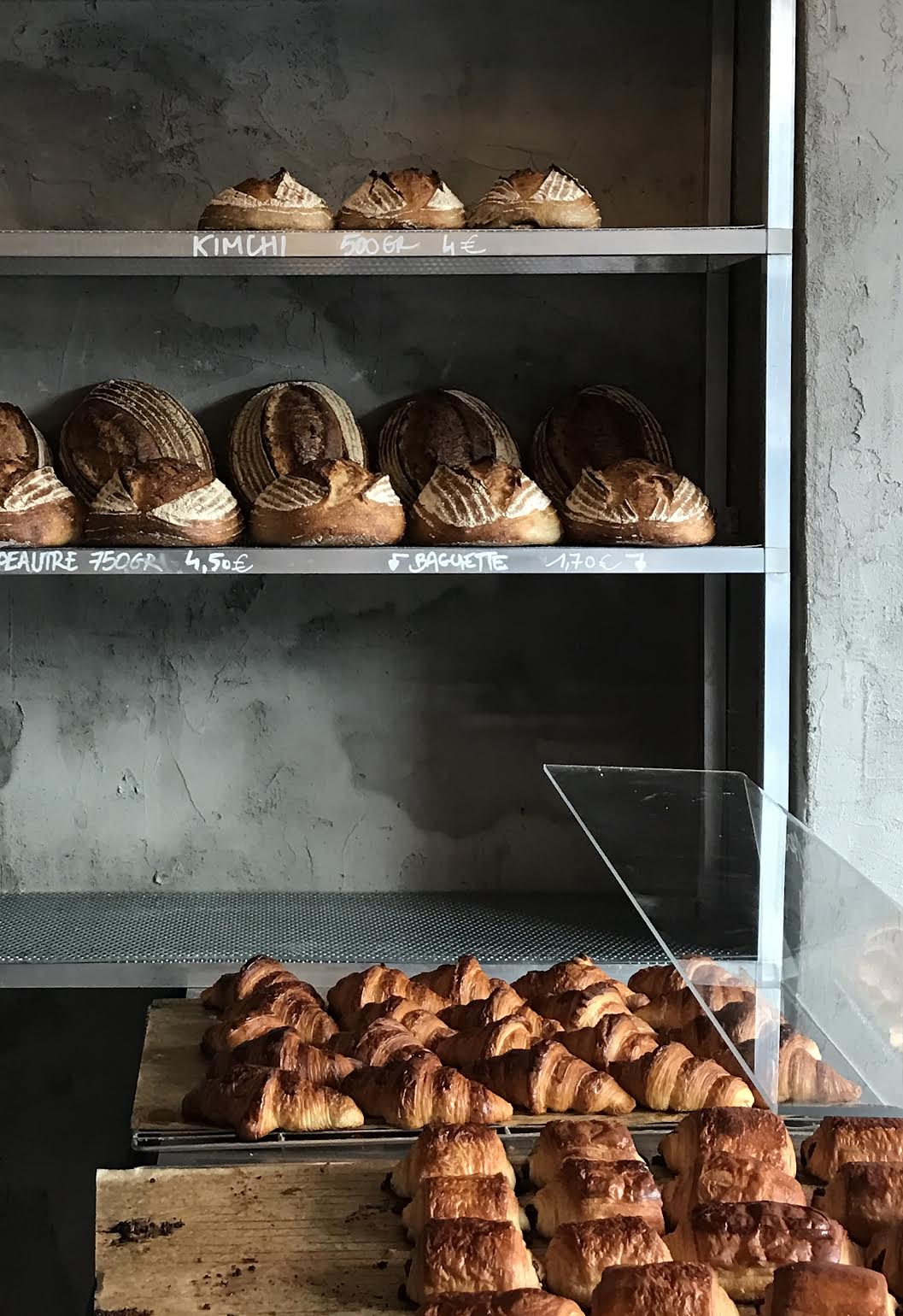
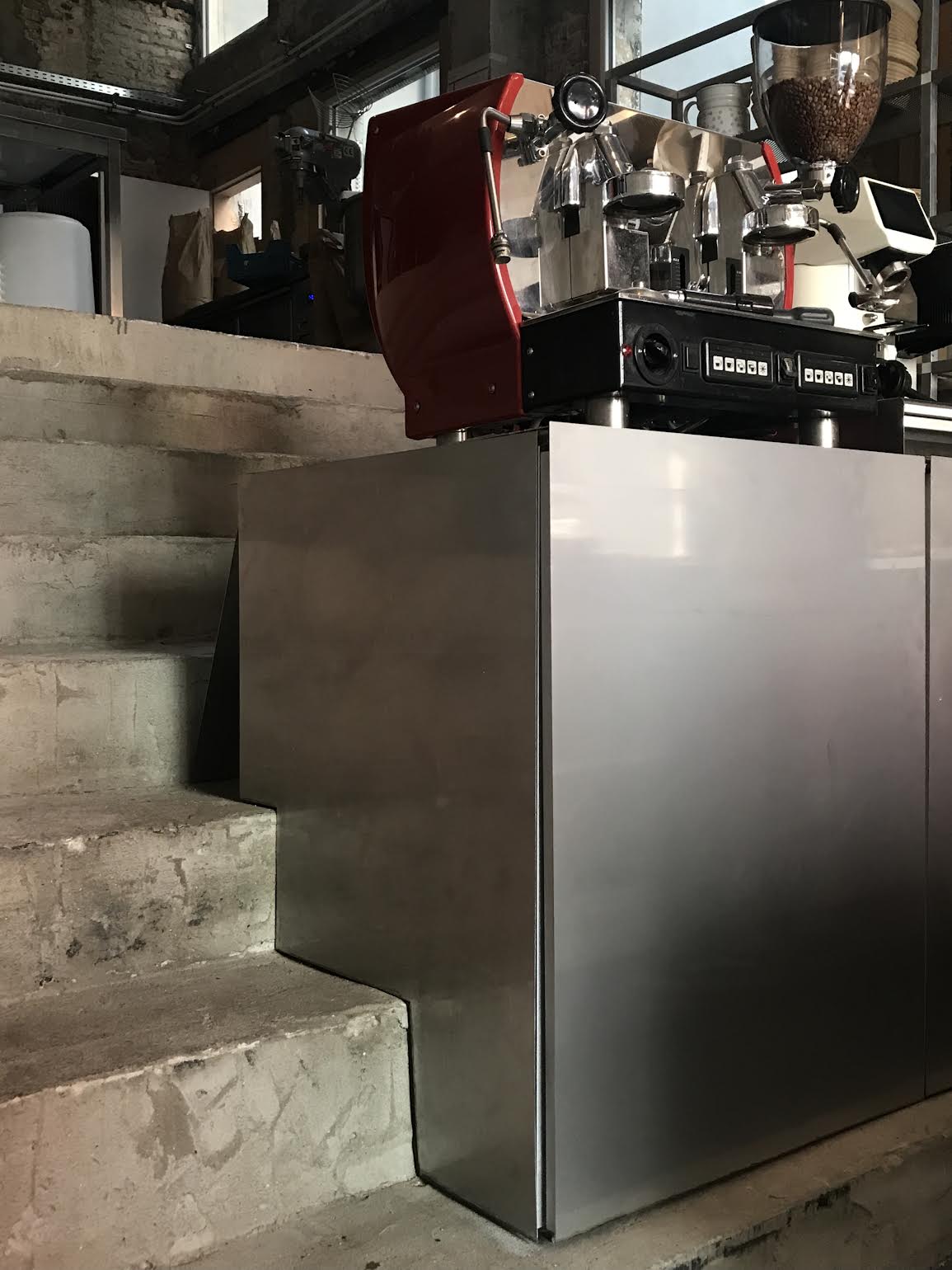
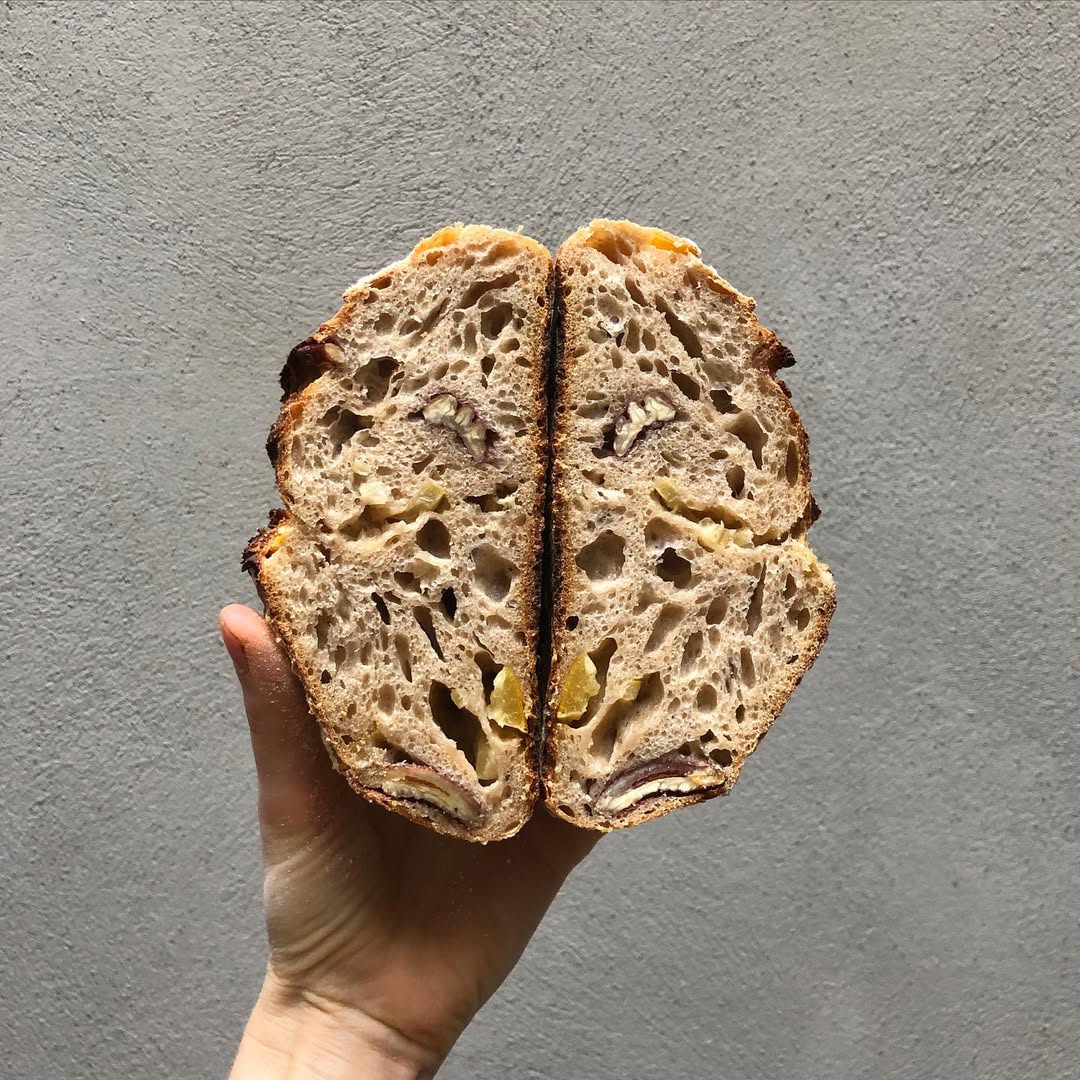
Manon and her partner Alexis run Pinpin, a small artisan bakery in the Marolles. “Producing the essentials: a few different breads, baguettes, focaccia, and some viennoiseries. If you pass by, you’ll likely be greeted with a big smile—and a chat.” (And yes, a big smile.)
→ PinPin - Blaesstraat 152
→ Click for a chat on sourcing the best ingredients + favourite hangouts in the Marolles